jabel
About Email newsletter Sanity Project Wendell Berry Resources Page Archive Also on Micro.blog
  • The peasant home

    Patrick Joyce, Remembering Peasants:

    The dwelling is also a constitutive part of the relationship between past and present generations, between the living and the dead. Something handed on, or hoped to be handed on, something to be received. When the dead have a foundational role in human life, as is the case with peasants, then the house takes on a cosmological significance. But the house remains eminently material at the same time. There is also that other house, the one where the dead dwell, the graveyard. So, the place of burial is yet another dwelling place in the peasant village, one always of the greatest importance. The word human comes from the Latin word humus, meaning earth or ground. We are made from the earth to which we will return. The place of inhumation is, or at least was, as surely as the dwelling house, an indication of the sense of having a place in the world, of taking possession of a place and securing it as one’s own.

    There is a story by Pirandello in which he refers to a Sicilian baron who refused to let the peasants bury their dead on his land, because he knew that if they did they would come to regard it as their own by natural right - to regard it as their house. The peasants who oppose him, even though the land is in the baron’s ownership, in fact regard the land as already theirs, the dead needing to be buried on ‘our land,’ so that the living can be near them in order that they may be watched over and cared for. In times not so far in the past, where land was owned the custom was that the dead be buried there and not in a cemetery. At the same time as the living watch over the dead, the dead watch over and care for the living; in Corsican culture the dead elders of the house retain in death the authority they once possessed in life.

    → 6:43 AM, May 8
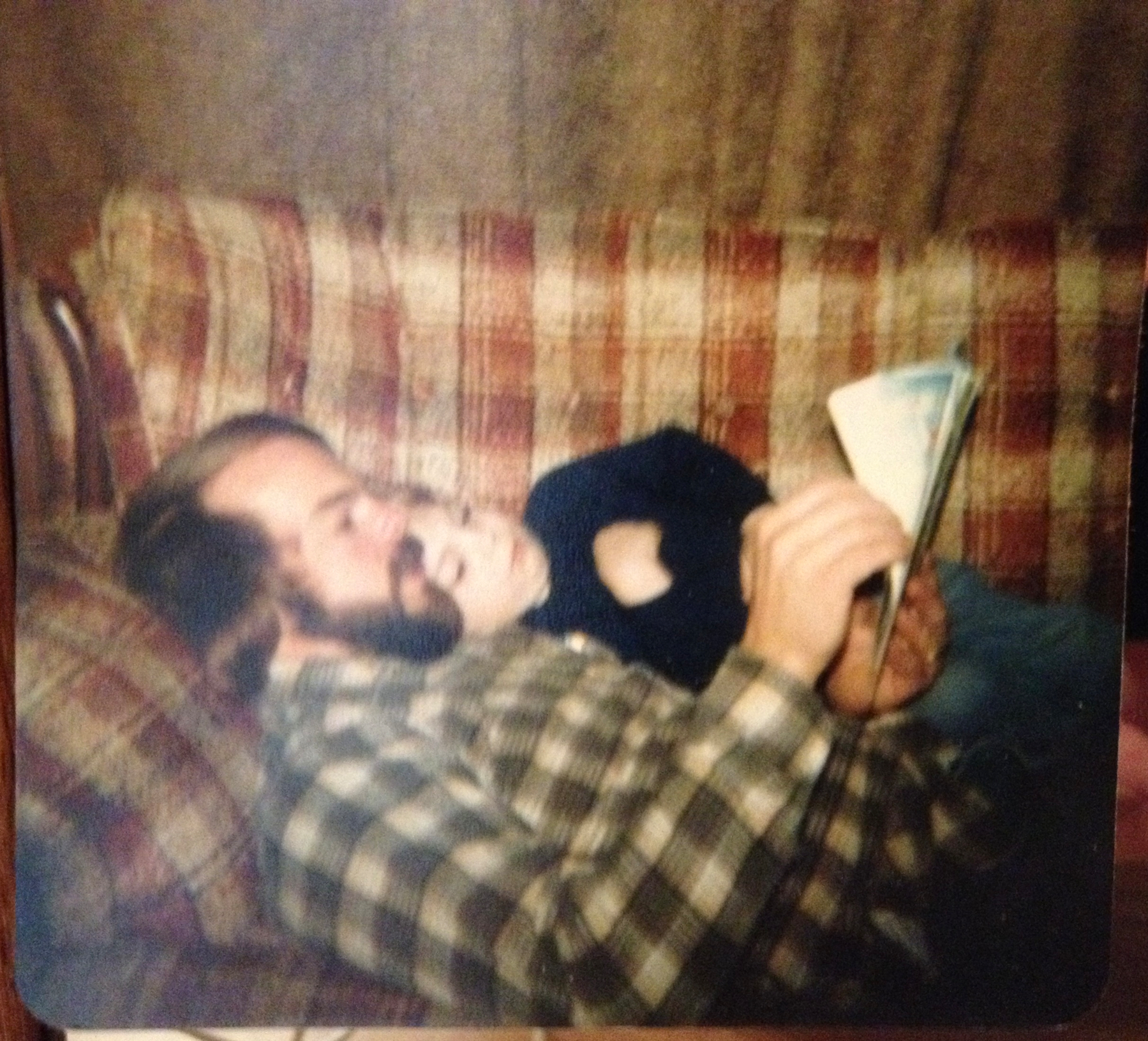
  • Me and Dad

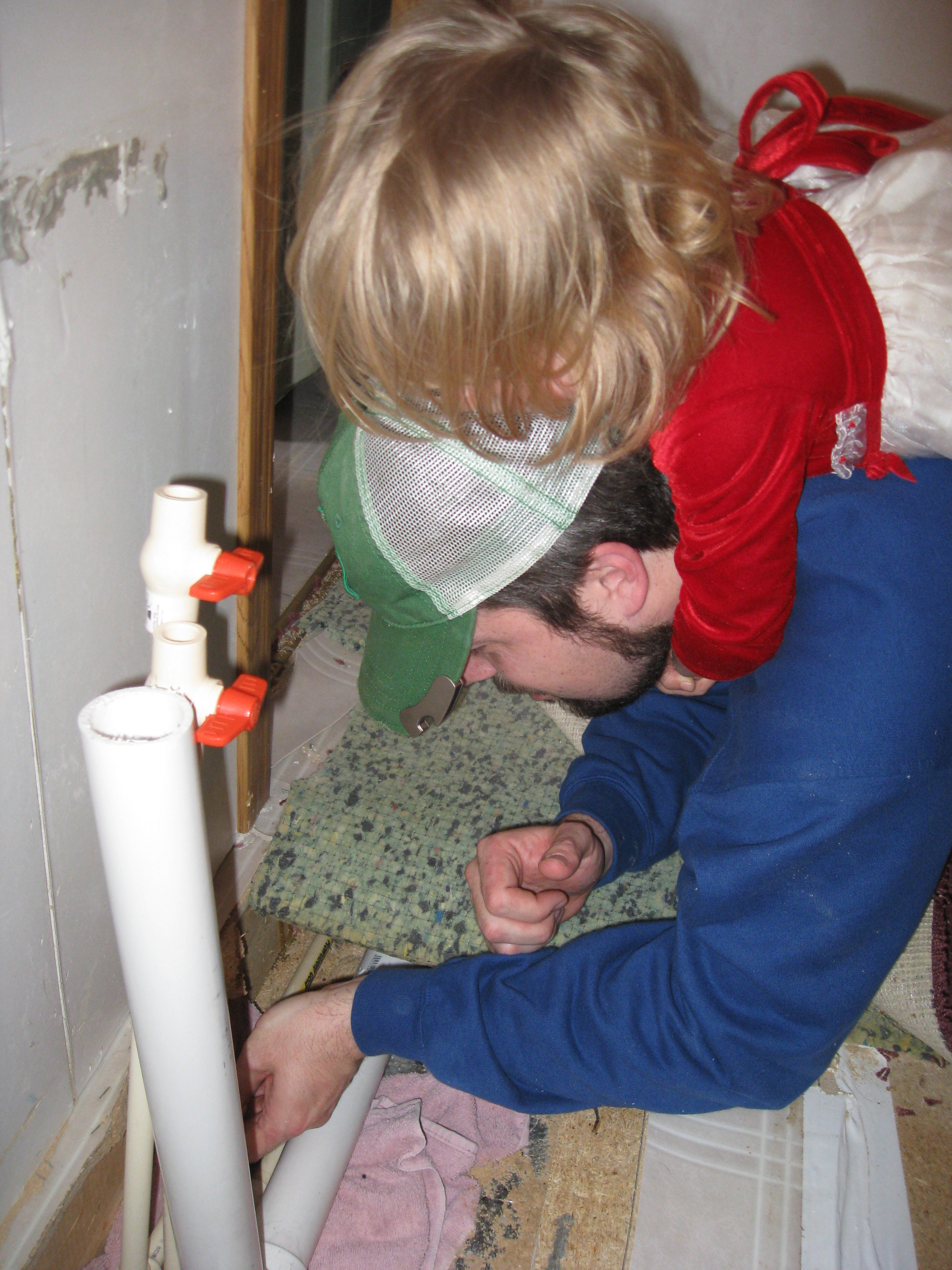
    Me and Darcy

    → 6:35 PM, May 7
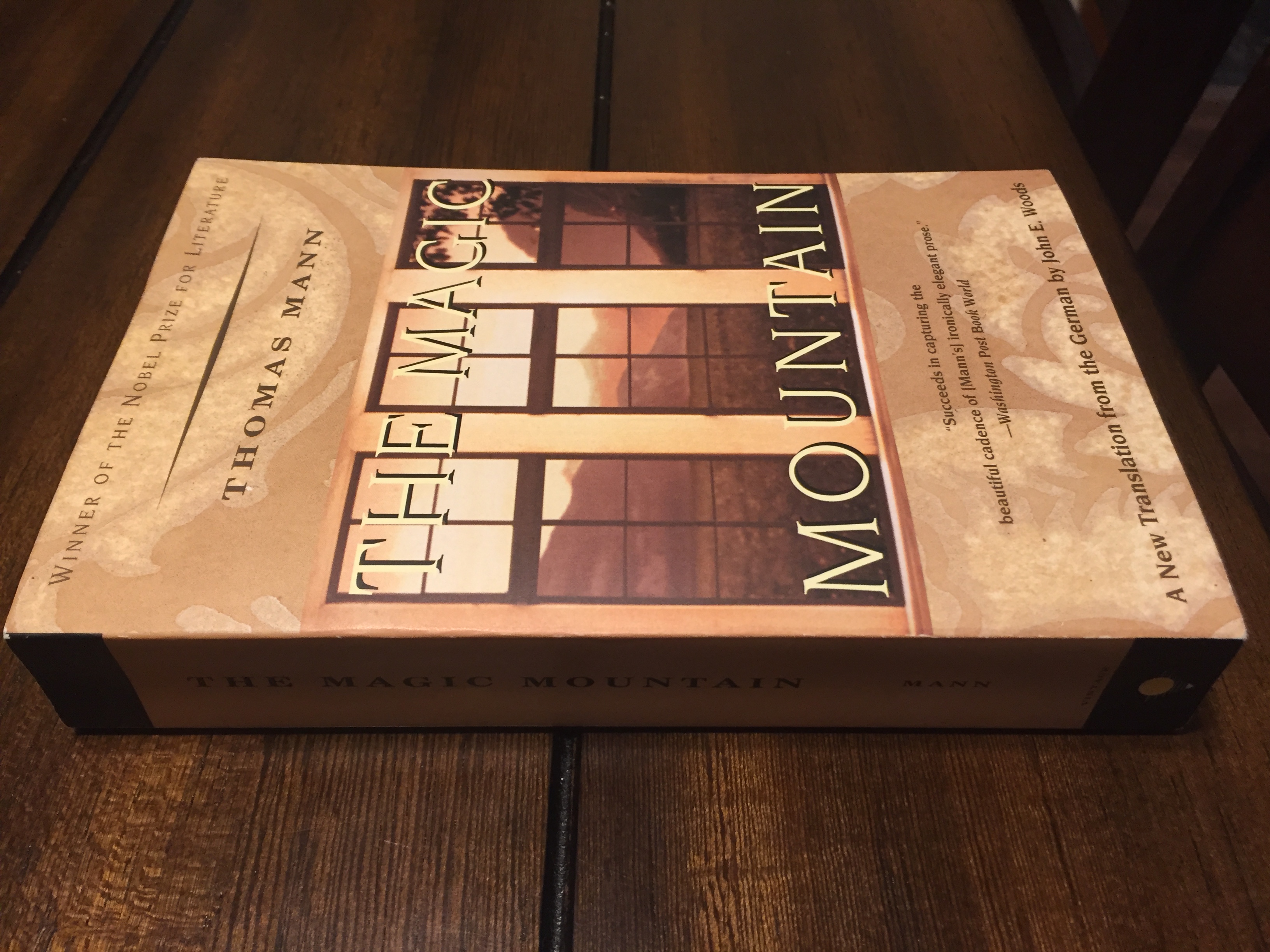
  • The Magic Mountain

    Still trawling the archives. I used to have a Buttondown newsletter. The following—a themed issue rather than the usual “what I read this week” format—is the only thing I’ve found worth saving from that era. Reading The Magic Mountain every morning over that winter of 2018-2019 remains as a happy memory.

    Welcome, friends. You can only come across so many references to a novel before you decide you need to read it for yourself. That’s why I started reading The Magic Mountain by Thomas Mann.

    It’s the story of Hans Castorp, “an ordinary young man” who visits his cousin Joachim at the Berghof sanatorium in the Swiss Alps where residents are treated for tuberculosis. Although he plans to visit for only three weeks, Hans is eventually diagnosed with a “moist spot” - a sign of tuberculosis - and stays for seven years. The novel follows Hans' development as he falls in love with a mysterious Russian and befriends, in turn, a humanistic disciple of the Enlightenment, a reactionary Jesuit, and a Dionysian Dutchman. It ends with the outbreak of the First World War, when our hero leaves the Berghof for an uncertain fate.

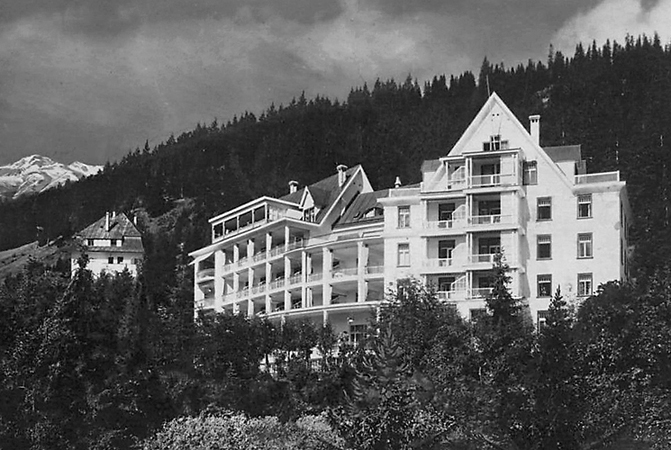
    Image: The Wald Sanatorium in Davos (ca. 1920), where Mann took his wife to be treated and which inspired his novel.


    Tuberculosis ravaged Europe in the age of Romanticism (a movement in reaction against the Enlightenment). That historical coincidence led to a blending of poetry with an idealization of disease, as in the poetry of John Keats. Hans Castorp brings to the sanitarium a “sympathy with death” which he absorbed from this milieu.

    Image: Sketch of John Keats on his deathbed by Joseph Severn


    Early in the novel, Hans Castorp is warned by Settembrini that while it is pleasant to experiment with ideas, it would be safer for Hans to patiently learn what Settembrini has to teach him. And he does learn from Settembrini, but while also learning from others and maintaining a critical distance from them all.

    The Berghof sanitarium - the magic mountain - is a hermetic place, sealed off from the influence of the “flatlands” and yet a place of transformation. When we meet Hans, he is a chatty, bourgeois engineer. By the time we leave him, he has passed through seven years of individuation. He has watched his would-be teachers run up against the limits of their ideologies. He has experienced serious losses and entered into a “great stupor”. It is only war that draws him out of his lethargy and forces him out of the sanitarium.

    C.S. Lewis said he would be happy “to be always convalescent from some small illness and always seated in a window that overlooked the sea, there to read these [Italian Renaissance] poems eight hours of each happy day”. But the world makes too many demands for that. Individuation is not neoliberal self-help aimed at creating better workers. It is a process of becoming who you are, experimenting with ideas, and experiencing losses. It is an alchemy, moreover, intended to situate you in the world of demands, to carry you down from the magic mountain and into the world of conflict.


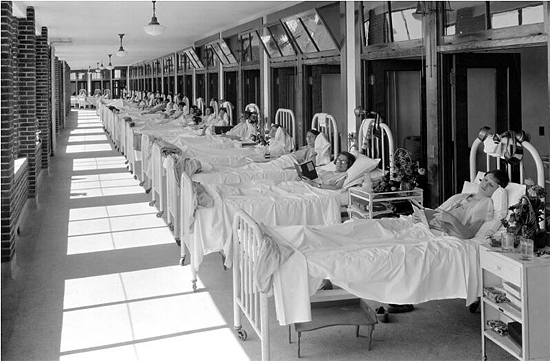
    Image: Residents taking their “rest cure” at a sanatorium. It was believed that the high altitude and crisp air of the Alps contributed to the cure of tubercular residents.


    Why The Magic Mountain has particular relevance for our time. Ignore the writer’s nonsense about the book being tedious. It is long though…

    → 8:22 AM, May 7
  • Rare earth

    I continue to come across some old drafts as I clean out my Dropbox. Here is a poem that I can’t date exactly–maybe a couple of years ago?

    I listened to a podcast today
    about rare earth minerals.
    It didn’t help my mood.
    As the rage built inside me,
    I imagined writing a poetic diatribe.

    But I’m tired.
    And my tooth hurts.
    And I’m just so sad about everything.

    What good would it do,
    artfully arranging words while
    the earth is cracked open
    and the bodies of the poor are broken
    and we here in America await news
    of the next goddamn iPhone?

    God damn the iPhone.
    God damn the killing technology.
    God damn me and you,
    playing games and scrolling scrolling scrolling
    on devices scratched from the bones of our
    rare earth.

    → 3:49 PM, May 6
  • “A company man for USA, Inc.” I had an old draft that ended with that line but apparently I deleted it a couple of nights ago. Oh well! Feel free to use it for a folk protest song.

    → 8:22 AM, May 6
  • A land full of people

    Patrick Joyce, Remembering Peasants:

    The means of survival is land. Peasants do not see land like we do. We see land in terms of ‘nature’ , something separated from the artificiality of humankind’s creations, or, if these creations are included, then the natural, the supernatural and the unnatural are distinguished one from another. ‘Nature' does not convey peasant reality, though we like to think it does. It is for peasants a semantically empty category, and there is little iconic or verbal representation of it in what records peasants have left (although educated peasants writing for an audience of non-peasants do embrace the idea sometimes). From the point of view of the vast majority of peasants, there are, on the other hand, meadows, a river, the sky. For peasants the land is useless without their own work upon it, it will not be domesticated, ‘It will not open and it will not close', as is said in Poland. Marcin Brocki cites peasant words collected by the anthropologist Jacek Olędzki in the Poland of the 1960s: ‘I like it where the plain is; when I was in America I saw a mountain, and this was an awful view. And when it’s flat wherever you look, so that you could roll an apple, that is beautiful. Where you are perfectly flat, a lake, that’s beautiful. And when there are mountains, sands, forests, you don’t even want to come back.’ There is fear and even hatred of the wild, so unlike our veneration of wildness and the wilderness. The wild as our sublime makes no sense to the peasant.

    The ideal of “nature” as a landscape untouched by humans is a legacy of twentieth century environmentalism that is best left behind. For one thing, what we have often thought to be “untamed wilderness” was, in fact, a vast garden tended by generations of native peoples. The Amazon, for example.

    Another reason to leave that ideal behind is that ecological thinking desperately needs an animist turn. I am truly thankful for every effort to preserve land from development. The Sycamore Land Trust does work like this locally and I’ve walked their trails enough over the years to see the great value in it. At the same time, that cannot be the only strategy. We need to bring in something of that peasant view of the land as the locus of work. We need a land that is thoroughly peopled with human and non-human persons, working together in mutual flourishing.

    → 6:44 AM, May 6
  • I’m moving stuff out of Dropbox so I can stop paying for it. I found this in a drafts folder but I have no memory of it. So I post it here, contextless.

    Time is a stalking beast,
    Watching, waiting to bring you down.
    But we are distracted,
    Unconscious of the danger.

    → 7:39 PM, May 4
  • Still listening to the new David Benjamin Blower while cranking through month-end closing today.

    Where there are feet upon the earth there is a village hall
    Where there is prayer there is a temple and a gathering
    This is an event
    This is a happening
    God dwells in tents where the beasts sing
    God dwells, God dwells here with everything

    → 9:49 AM, May 4
  • Stages of Love

    Everyone knows about child development; adult development is less appreciated. One aspect of adult development is the maturation of long-term love.

    Young Love
    This is the period characterized by looking long and deeply into the lover’s eyes. The world disappears and the only thing that matters is what is seen in those scrying orbs. This period is well documented (see the pop music charts of the last seventy years) and, unfortunately, grasped too tightly by people who do not realize it is meant to be a phase, not a permanent condition. That mistake is the source of a great deal of misery.

    Striving Love
    This is the period in which the lovers break the mutual gaze long enough to begin building the world seen in each other’s eyes. The mutual gaze is re-engaged less and less often because they’re busy! This is also the most perilous time of the relationship (see the country music charts of the last seventy years). The danger lies in two directions: 1. The work is hard and one or both lovers begin to question if it is worth it. 2. One or both lovers fail to mature through this transitory phase, wishing for the young love phase, and begin to look elsewhere for a new start.

    Adept Love
    This is the period characterized by the lovers side by side, looking out at the world they have built together. Not so much of the mutual gaze these days; it has been replaced by a rooted knowing, a deeply felt steadfastness. The lovers are no longer those young people with hearts aflutter or the hardworking-yet-anxious lovers of the middle period. They have become the fertile ground out of which grows the future.

    Future Phases?
    Meet me back here in twenty years, as we approach fifty years of marriage and seventy years of age, and I’ll tell you what I’ve learned.

    → 8:49 AM, May 4
  • Pimento cheese

    Made pimento cheese for a gathering of friends tonight. I’ve always loved pimento cheese but this is the first time making it. So simple.

    • 2 cups shredded cheddar cheese (shred it yourself; it’s cheaper!)
    • 4 oz diced pimentos
    • 1-2 tsp mustard
    • salt and pepper
    • small amount of grated onion, to taste
    • a few or many dashes of hot sauce
    • 1/2 cup mayo (added a little at a time until you get to the desired texture)

    Mix together and chill for at least 30 minutes. Eat with Ritz crackers. Or with bread. Or by the spoonful. I ain’t your boss.

    → 1:30 PM, May 2
  • I’m not sure how I heard of David Benjamin Blower or when I followed him on Bandcamp but I’m glad today that I did. His new album is great. “Apocalyptic folk,” he calls it, and that certainly got my attention. 🎵

    → 1:21 PM, May 1
  • "May is Mary's month"

    Flesh and fleece, fur and feather,
    Grass and greenworld all together ;
    Star-eyed strawberry-breasted
    Throstle above her nested

    Cluster of bugle blue eggs thin
    Forms and warms the life within ;
    And bird and blossom swell
    In sod or sheath or shell.

    All things rising, all things sizing
    Mary sees, sympathizing
    With that world of good
    Nature’s motherhood.

    From “The May Magnificat” by Gerald Manley Hopkins

    → 8:24 AM, May 1
  • Wonderful episode of The Emerald: “Carry That Weight: On Mythic Burdens and Cosmic Supports.” If you’re feeling the weight of the world—and you’re open to an animist view of the world—I cannot recommend it highly enough.

    → 7:21 PM, Apr 30
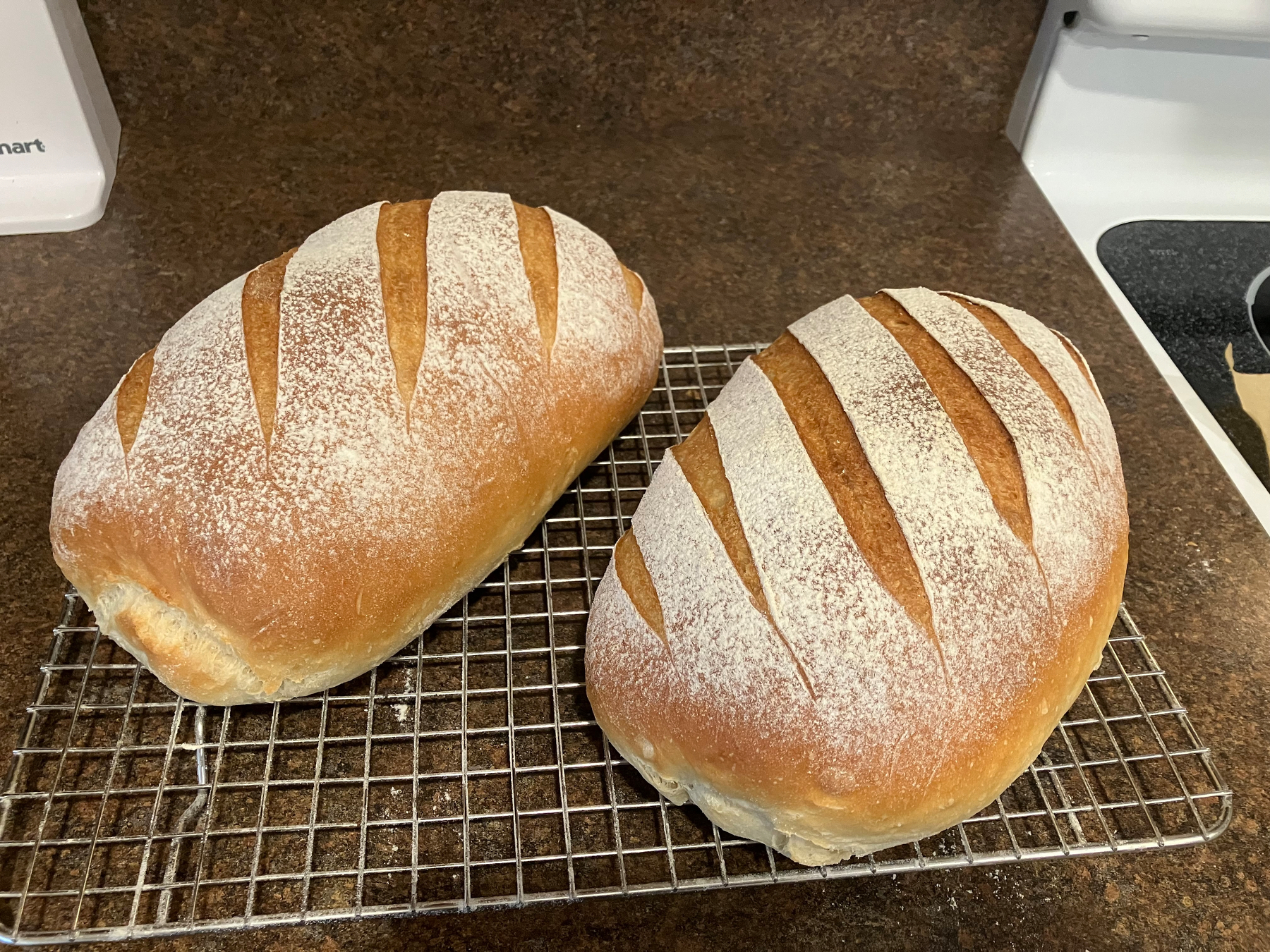
  • This is the sort of bread Rachel turns out on a random Thursday. She’s gotten so good over the last couple of years.

    → 1:13 PM, Apr 30
  • A quick search of my posts reveals that I am excited at this time every year when the tree frogs start their ruckus. Dear reader, it has begun.

    → 8:19 PM, Apr 28
  • Great segment from John Oliver on the continuing dangers of AI around mental health, suicide risk, and plain old delusion–and the absolutely sociopathic responses of the AI CEOs.

    → 8:26 AM, Apr 28
  • A really interested tidbit from Joel Salatin about how North America before the Europeans actually produced more food than it does today, even with the various chemicals.

    → 1:36 PM, Apr 27
  • CNBC newsletter:

    Musk’s Tesla is beta testing an in-vehicle version of xAI’s Grok chatbot. First rolled out last year, it allows drivers to give voice commands to their car’s navigation system.

    Meanwhile, my thirty-year old pickup truck has no power windows, locks, mirrors, or seat. The radio/cassette player doesn’t work–and I may not fix it. It doesn’t get in a hurry to go anywhere, which is increasingly to my taste.

    → 8:57 AM, Apr 27
  • The Louvin Brothers, “Dying from Home, and Lost.” The harmony on this one really reminds me of my childhood church, which I wrote about here. That album, by the way, is one banger after another.

    → 6:32 PM, Apr 25
  • It’s ridiculous, really, that I haven’t read any of the Foxfire books yet. I’ve checked out from the library an ebook edition of The Foxfire Book of Appalachian Cooking to get me started and I’m going to keep an eye out for used copies of the main series.

    → 9:39 AM, Apr 24
  • This might interest a cross-section of folks here: A Greek Orthodox priest has released “Paradise Metal.” From the review site: “microtonal Byzantine modes with DIY electronic modernism,” “sublime new age ambient to shoe-gazy basslines and mountaintop guitar shreds to techno incantations.” Bandcamp

    → 6:31 AM, Apr 24
  • “We do not easily remember peasants”

    Patrick Joyce, Remembering Peasants:

    We do not easily remember peasants. The realities of their lives are a dim presence in the historical record. We catch only glimpses in the great obscurity that is the centuries-old peasant past of Europe. The first is from the Poland of a century ago:

    Every field knows its owner, the Earth is indignant at every crime committed on its face. The moon watches and prayers are still said to it. The stars answer a woman or man who knows the right way to ask them. Nothing bad should be said near water. The wind listens and talks. … While animals do not know as much as man they know things he does not, the properties of plants and substances for instance, which are shown to men by animals. Some animals understand and condemn the immoral acts of man, the bee will never stay with the thief, the stork and the swallow leave a farm when an evil deed has been committed there. … The lark, which soars so high, is the favorite bird of the Angels; during a storm they hold it in their hands, and when, with every lightning flash the heaven opens, it is allowed to look in.

    This way of understanding the Earth and the heavens is part of a past we have now lost, lost in less than a single lifetime, lost with barely a sign of its loss in a present that is obsessed with itself.

    (In case you’re wondering, the quote within the quote is from Thomas and Znaniecki, The Polish Peasant in Europe and America.)

    → 6:46 PM, Apr 23
  • It’s clean sweep week here in town—the time of year when the city will, free of charge, pick up anything you put on the curb. Rachel said she’s already seen a couple of pickup trucks roaming the neighborhood trying to beat the city to some treasures. That will absolutely be me someday.

    → 4:00 PM, Apr 23
  • Thinking about Johnny Cash this morning brought to mind this from Over the Rhine: “Earthbound Love Song.” 🎵

    → 8:40 AM, Apr 23
  • Johnny Cash, “Satisfied Mind” 🎵

    → 5:49 AM, Apr 23
  • RSS
  • JSON Feed