Meeting the apparitions on their own ground

Patrick Harpur, Daimonic Reality: A Field Guide to the Otherworld … I will be outlining a way of perceiving the world which, while it does not explain the appearance of strange images, renders them intelligible. It is a way which requires, first of all, not that we believe, but that we suspend disbelief, as in the enjoyment of a theatrical production; a way which asks us to foster what Keats called “negative capability–that is when man is capable of being in uncertainties, mysteries, doubts, without any irritable reaching after fact and reason.
Continue reading →


"In an era where everything is bullshit and crime..."

This was an off-the-cuff remark I made today, but it resonated with the audience. Feel free to use it.

Then, do things that are neither bullshit nor crime. Fix things. Protect things. Consider the long term. Care about somebody.


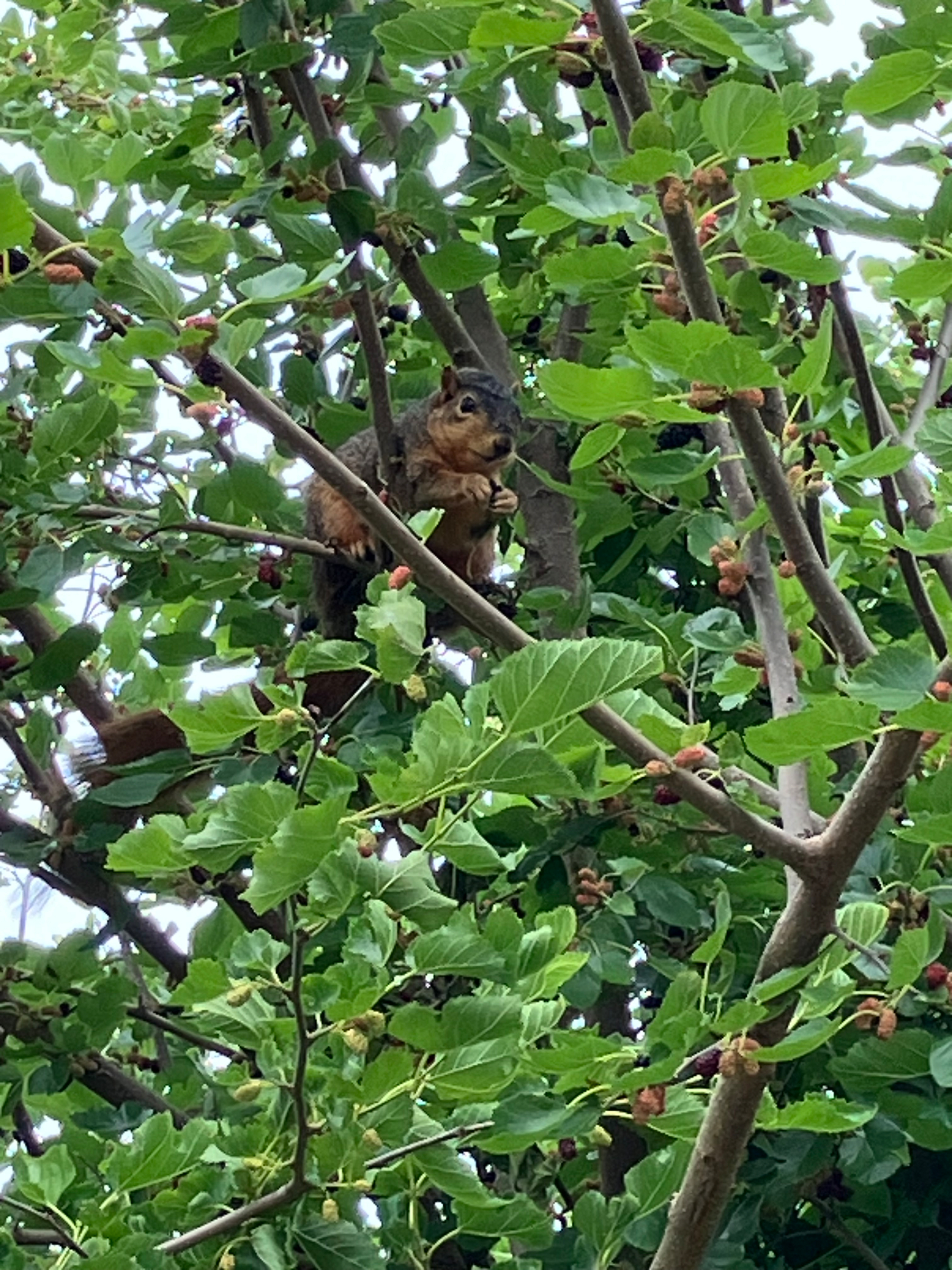
Squirrel in the neighbor’s mulberry tree. Photo by Rachel.


Today I learned that the East Fork of the White River (which runs south of town) is called Aankwaahsakwa Siipiiwi by the Miami people. This translates to “Driftwood River”–which is a far better name that East Fork of the White River!


The disappearance of Mr. Robert Kirk

Andrew Lang’s introduction to The Secret Commonwealth of Elves, Fauns, and Fairies: [The author, Robert Kirk] died (if he did die, which is disputed) in 1692, aged about fifty-one; his tomb was inscribed– ROBERTUS KIRK, A.M. Linguæ Hinberniæ Lumen. The tomb, in Scott’s time, was to be seen in the east end of the churchyard of Aberfoyle; but the ashes of Mr. Kirk are not there. His successor, the Rev.

Continue reading →


Gordon: “So a broken heart is also a heart that is breaking open so that it becomes larger, so that it can hold more of the grief and the love and the joy and the pain of the whole cosmos. That is what it is for. That is what you are for.”

Brother Ali: “I’m using my heart for / what hearts are for.”


Trickster Squirrel

George Hansen, The Trickster and the Paranormal: the trickster is a character type found in mythology, folklore, and literature the world over; tricksters appear as animals, humans, and gods. They have a number of common characteristics, and some of their most salient qualities are disruption, unrestrained sexuality, disorder, and nonconformity to the establishment. They are typically male. Tricksters often deceive larger and more powerful beings who would thwart them; they may be endearingly clever or disgustingly stupid—both cultural heroes and selfish buffoons.

Continue reading →


The rich and powerful used to pose with a hand inside their waistcoat, like Napoleon. Now they pose with thumbs up, like Trump.


Godspeed, Gordon

This morning I was watching Gordon White’s tribute to the recently-departed Peter Carroll. I’ve never read any of Carroll’s books and I doubt I ever will. I was watching for the same reason I read or watched nearly everything Gordon produced: you never knew when he would drop some jewel of knowledge or practice. He ended the video with a prayer that Carroll would be seated as an ancestor of practice.

Continue reading →


The bodies of peasants

Patrick Joyce, Remembering Peasants: How little we know about these bodies, these bodies that do the eating! Our ignorance is fed by our assumption that peasant bodies were the same as our bodies. They were not. The difference can be summarized thus: we have bodies, which we carry about in our minds, whereas they were their bodies. The head had not yet won victory over the medieval notion of the bowels as the centre of the body.

Continue reading →