In response to a recent post I wrote mentioning zines, @lewism pointed me to an episode of Rolf Potts’ podcast in which he discusses mixtapes, those homebrews of (chiefly) the eighties. I made a few mixtapes myself in the old days but, being a fundamentalist child, they were mainly of southern gospel quartets, that is to say, lame in the extreme.

(Explaining all this to our daughter Darcy, who was born after we left fundamentalism, I went down a quartet music rabbit hole on YouTube. Eventually she fled the living room. I’m sure our YouTube recommendation algorithms are thoroughly confused and will take some time to recover.)

I also watched the documentary discussed by Rolf Potts, Cassette: A Documentary Mixtape.

“Cassettes didn’t play a \*role\* in hip-hop in the early days. Cassettes \*were\* hip-hop.”

The documentary outlines the history of the cassette and the revolutionary impact it had. For the first time, it was possible to record at home: songs from the radio or other cassettes, found sound, and - crucially - your own music. And, as you can see in the documentary, this homebrew tradition continues into the present day.

Among young aficionados of cassettes, the attraction is surely the ability to record music at very low cost, together with the hipster weirdness of using obsolete technologies. Among older cassette lovers, there is likely the additional factor of nostalgia. I’ve seen a similar dynamic in myself as I’ve been listening to records since Christmas. Records - especially older ones - definitely don’t have the clean sound of digital music. There are flaws that cause them to skip and hiss. As a physical medium, a record carries time within itself. On the other hand, each time digital music is played it is an experience ex nihilo, as if you stand with the angels at the moment of creation. That is not nothing - and is definitely an argument in favor of digital music.

Nevertheless, records and cassettes have an element of wabi-sabi to them. (Important caveat: I have no expertise on this subject and it is not from my culture. Whatever I say here should be seen as provisional and open to correction.) Some attempts at a definition of wabi-sabi:

  • The honoring of “imperfection, brokenness, and decay.” The belief that “a thing gets more beautiful as it gets scarred from use and imbibed with its own story.” (David Duchemin, Start Ugly)
  • The “acceptance of transience, nature and melancholy, favouring the imperfect and incomplete in everything” (Lilly Crossley-Baxter, “Japan’s unusual way to view the world”)
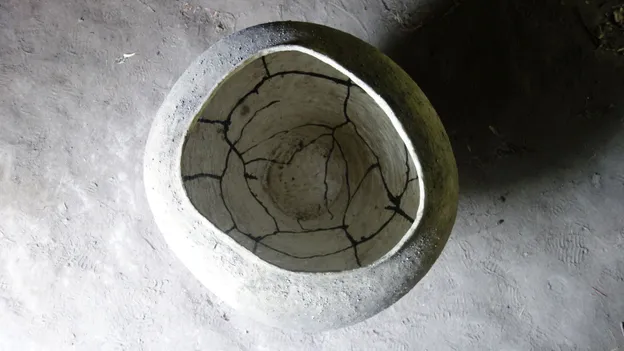
Sculpture by Kazunori Hamana; photo by Lily Crossley-Baxter Sculpture by Kazunori Hamana; photo by Lily Crossley-Baxter

  • The “beauty in the imperfections found as all things, in a constant state of flux, evolve from nothing and devolve back to nothing.” (Andrew Juniper, Wabi Sabi: The Japanese Art of Impermanence)
  • “The beauty of the withered, weathered, tarnished, scarred, intimate, coarse, earthly, evanescent, tentative, ephemeral.” (Crispin Sartwell, Six Names of Beauty)

Over time, physical mediums for music acquire imperfections and scars that speak of their history - even if we don’t know that history ourselves. When I am listening to an old record, I imagine previous owners sitting in their living rooms, laying in their bedrooms, doing any number of things while listening to this very record. What was going on in the life of that person when they first pulled the record from its sleeve? Was this piece of vinyl important to them?

I am not saying anything as simplistic as “physical good, digital bad.” What I am saying is that perhaps a digital self, a digital life, experience mediated by digital technology, is too thin to be fully satisfactory. Perhaps we have over-emphasized experience via the mind, forgetting that we are bodies and that human life is intimately connected to the wear and tear of physicality.

Other links:


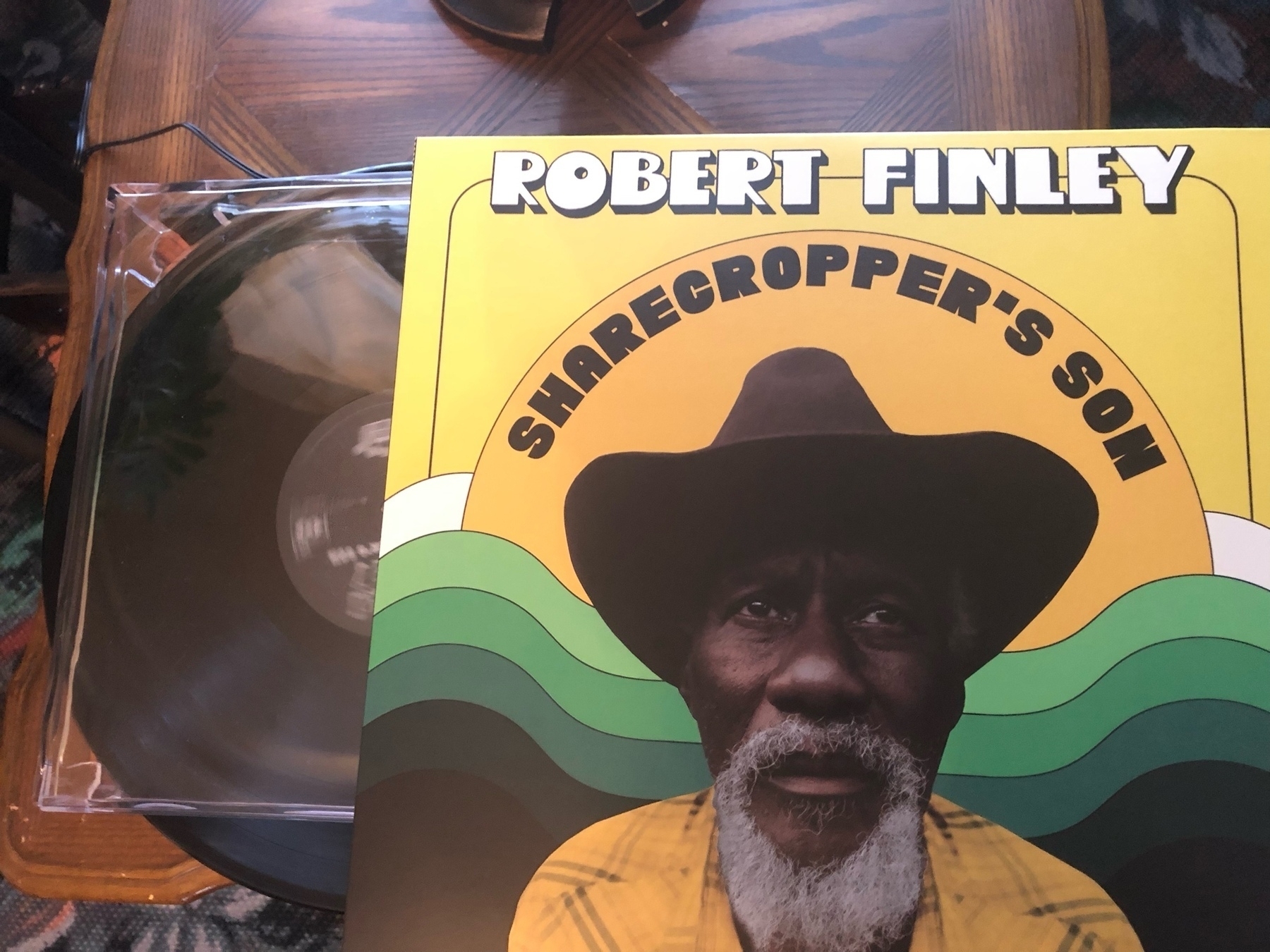
🎵 Now spinning. I first heard Robert Finley on the Colbert show a few days ago and fell in love with his wonderful voice and grandpa dancing. Bonus: this album was produced by Dan Auerbach of the Black Keys, so that’s a shot of extra confidence in its quality.


Austin Kleon’s latest (subscriber-only) newsletter issue is about the creative seasons. Two things:

  1. It contains a pdf version of a zine he wrote on the subject. I know some people around micro.blog have recently been talking about zines and other ideas for analog delivery of writing. This is an interesting way of doing that: digitally delivering a pdf of something meant to be printed and folded.
  2. I am definitely a person who goes through creative seasons. In the past, late-winter and early-spring are when I’ve started more creative projects. This latest round has been a bit of an anomaly since it started in early winter - but I think that was driven in large part by my attempt to resist Big Tech and seeking out other ways of communicating.

A Russian farm has given its dairy cows virtual reality headsets in a bid to reduce their anxiety. All comparisons to Zuckerberg’s metaverse aspirations should be avoided in order to keep the herd calm.


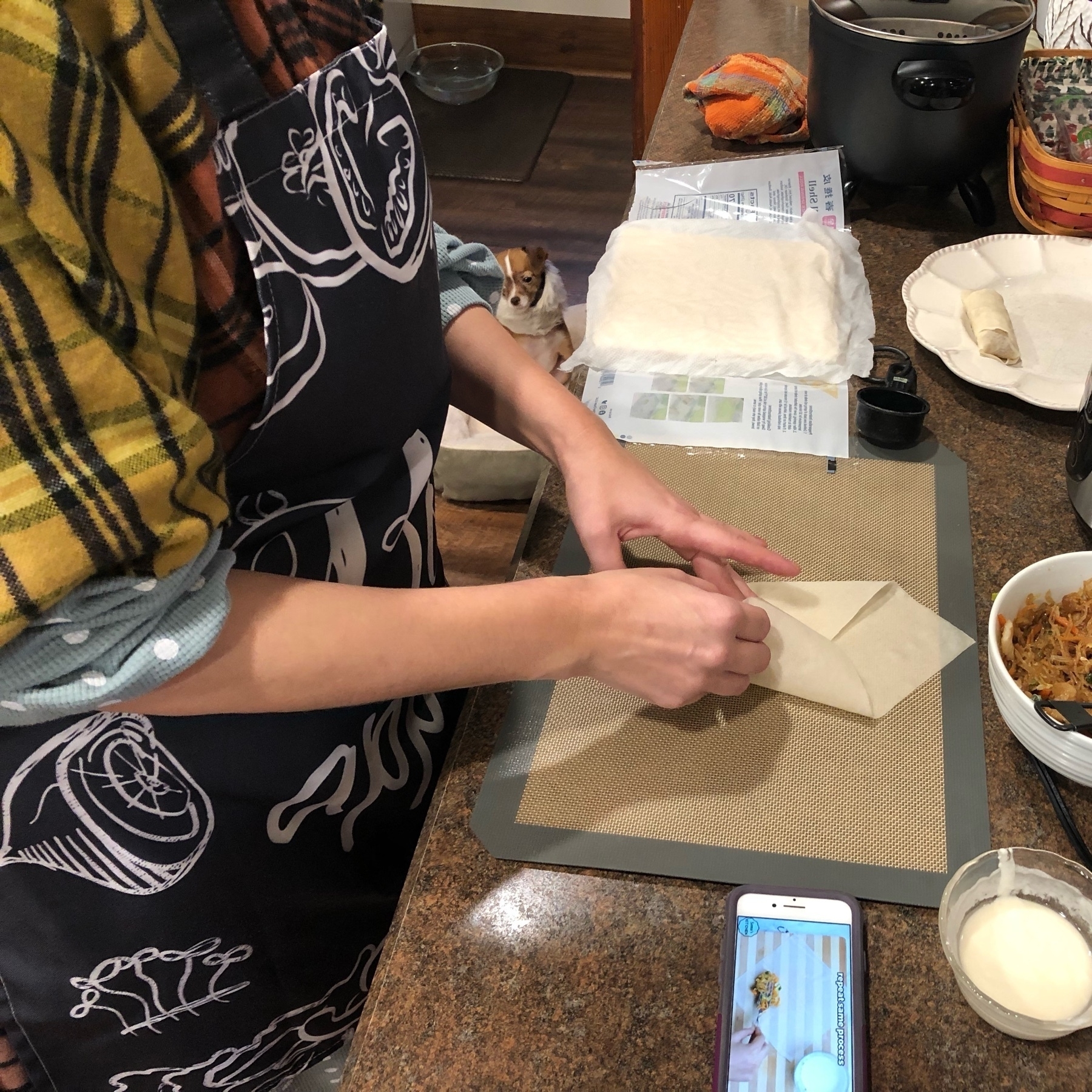
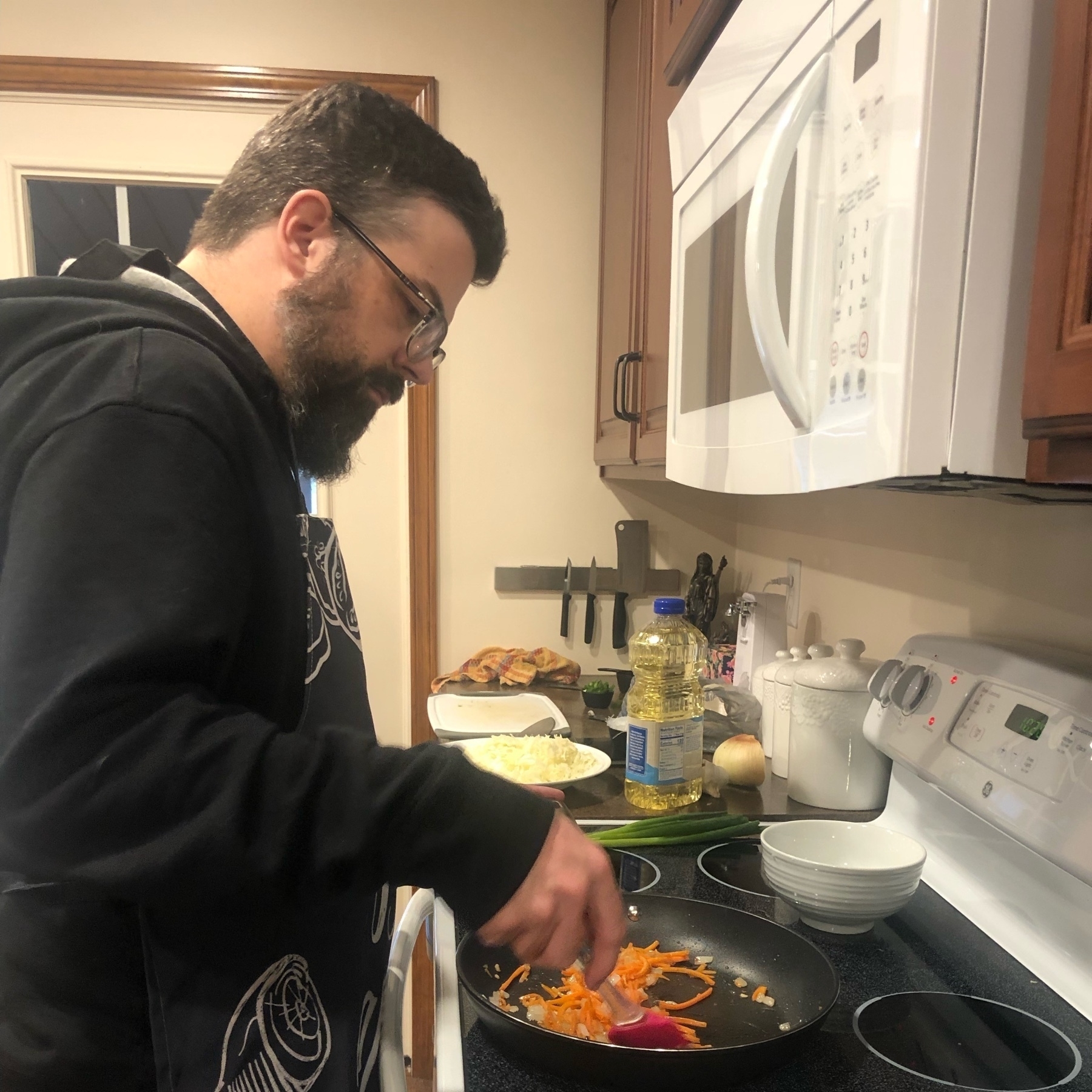
Sunday cooking: broccoli with garlic sauce, hot and sour soup, and vegetable spring rolls.


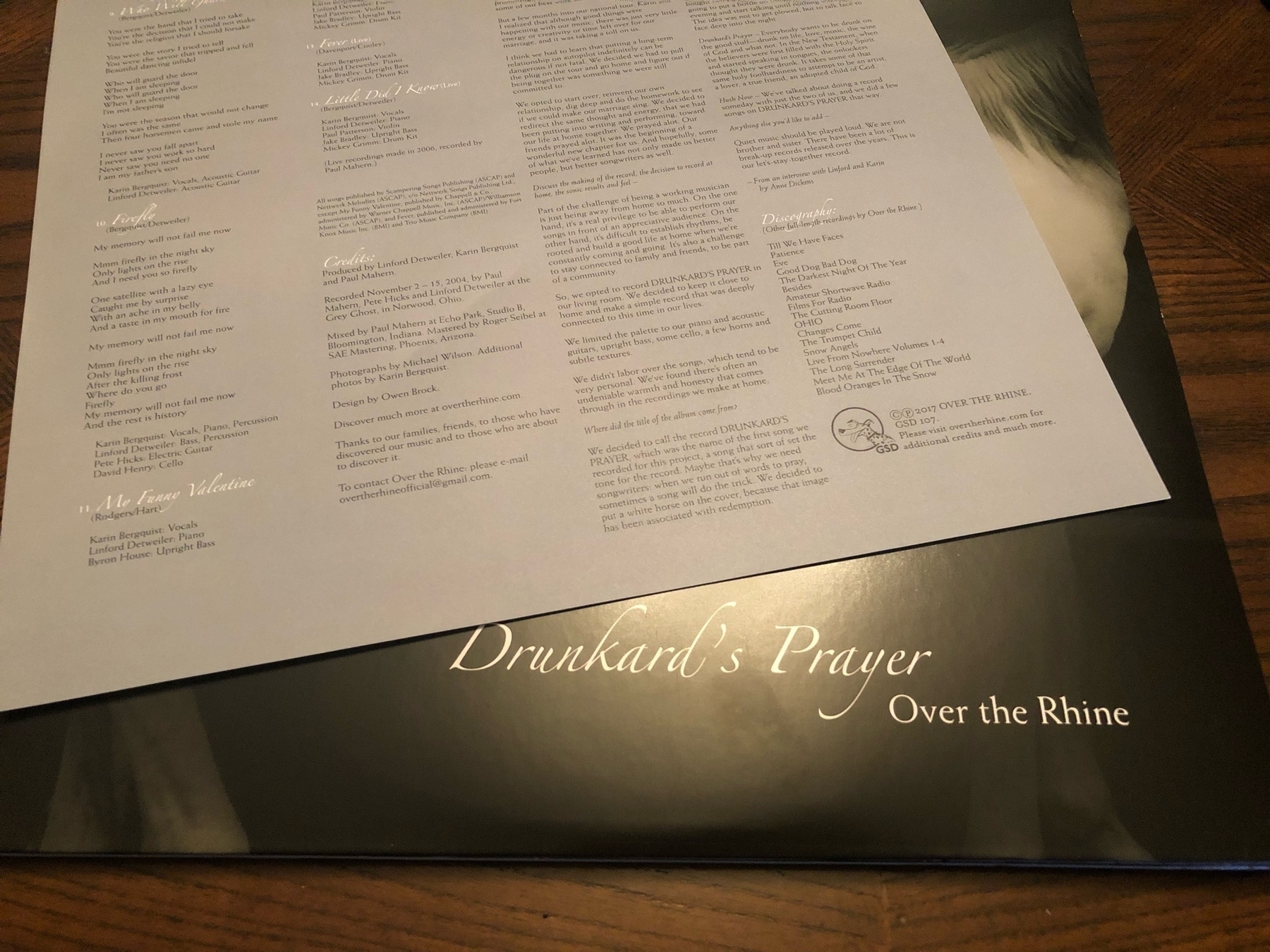
Today I found a copy of Over the Rhine’s “let’s stay together” record. I’m thankful both that I found it and that they stayed together.


The Dig (streaming on Netflix) is a beautiful movie contemplating death and the past. Ralph Fiennes and Carey Mulligan are excellent. The romantic subplot between some secondary characters didn’t feel strictly necessary but that’s my only criticism. It’s loosely (according to Wikipedia based on the excavation at Sutton Hoo - which is fascinating in its own right.


Amazon Prime is an economy distorting lie” by Matt Stoller. Really good explanation of how Prime actually raises prices across the internet - and why it’s a key part of the DC Attorney General’s antitrust case against Amazon.


This article on the yin-yang role of gorse in the ecological concept of succession reminded me of this video showing that process in action. Essentially, leave the land the hell alone and it will “manage” itself into a complex, wonderful ecosystem. “Land management” as it is currently practiced in state DNRs and US National Forests is management toward the end of profit maximization. (In case you didn’t know, in the United States logging is permitted in national forests. In order to be fully protected, an area has to be declared a national park. This seems to me to be some deceptive nomenclature.)


It’s a new year - and that means well-intentioned people making resolutions and other well-intentioned people insisting that we’re all good enough as we are. Both are right.

It seems clear to me that most of us could use some improvement and such improvement requires intentionality and planning. The beginning of a new year is as good a time as any to do that.

It also seems clear to me that some of our ideas about self-improvement are driven by corporations intent on exploiting our insecurities for their own profit, a.k.a. marketing.

This tension between self-improvement and self-acceptance is one that has bedeviled me often. I won’t say I have any answers but I do have some experience.

I suggest two words to keep in mind:

Grace

Be gracious with yourself. Something needs improvement? That’s fine! Approach the issue knowing that you are not your enemy. Get out of the conflict frame of mind.

For example, I’ve let my running and meditating practice fall apart over the last couple of months. It’s not the first time and it won’t be the last. I shrug my shoulders and make plans to gently correct it.

Running: Work back into the practice by running a mile a day 3-5 times per week. Increase that from a mile as I feel like it. I’m in no hurry. I’m not going to die of a heart attack if I’m not running a 5k next month. One mile is better than zero miles.

Meditating: Work back into the practice by meditating 20 minutes at a time. I was meditating for longer periods of time and there’s a voice in my head that wants me to believe that 20 minutes (or even 10 or 15 minutes on really distracted days) isn’t good enough. But I will be gracious with myself. Ten minutes is better than zero minutes.

Whim

I was reading The Pleasures of Reading in an Age of Distraction this evening when it occurred to me that Alan Jacobs’ discussion of Reading at Whim might apply here also.

The Eat Your Greens school of reading (see Adler/Van Doren in How to Read a Book) would have us read the right books in the right way and - most importantly - have the right opinions about them. Jacobs offers a different approach: Read at Whim.

Eventually, however, he comes upon a problem similar to the self-improvement/self-acceptance conundrum. Not all books are equally valuable (some are more like junk food) - yet he still maintains that the Eat Your Greens school misunderstands the point of reading.

This is where he distinguishes between whim - “thoughtless, directionless preference that almost invariably leads to boredom or frustration or both” - and Whim - “based in self-knowledge.”

Capital-W Whim includes a playfulness grounded in a person’s knowledge of their own interests, capabilities, etc. It is not based on what others believe you should do, much less on what will enrich people wholly unrelated to you.

Grace applied to self-improvement means you will be kind to yourself, refusing to see yourself as your enemy. Whim applied to self-improvement means you will approach it with a certain playfulness, always with reference to what leads to your own flourishing.

Together this means that self-improvement is best approached through love and patience. The same approach you would take with a beloved friend.