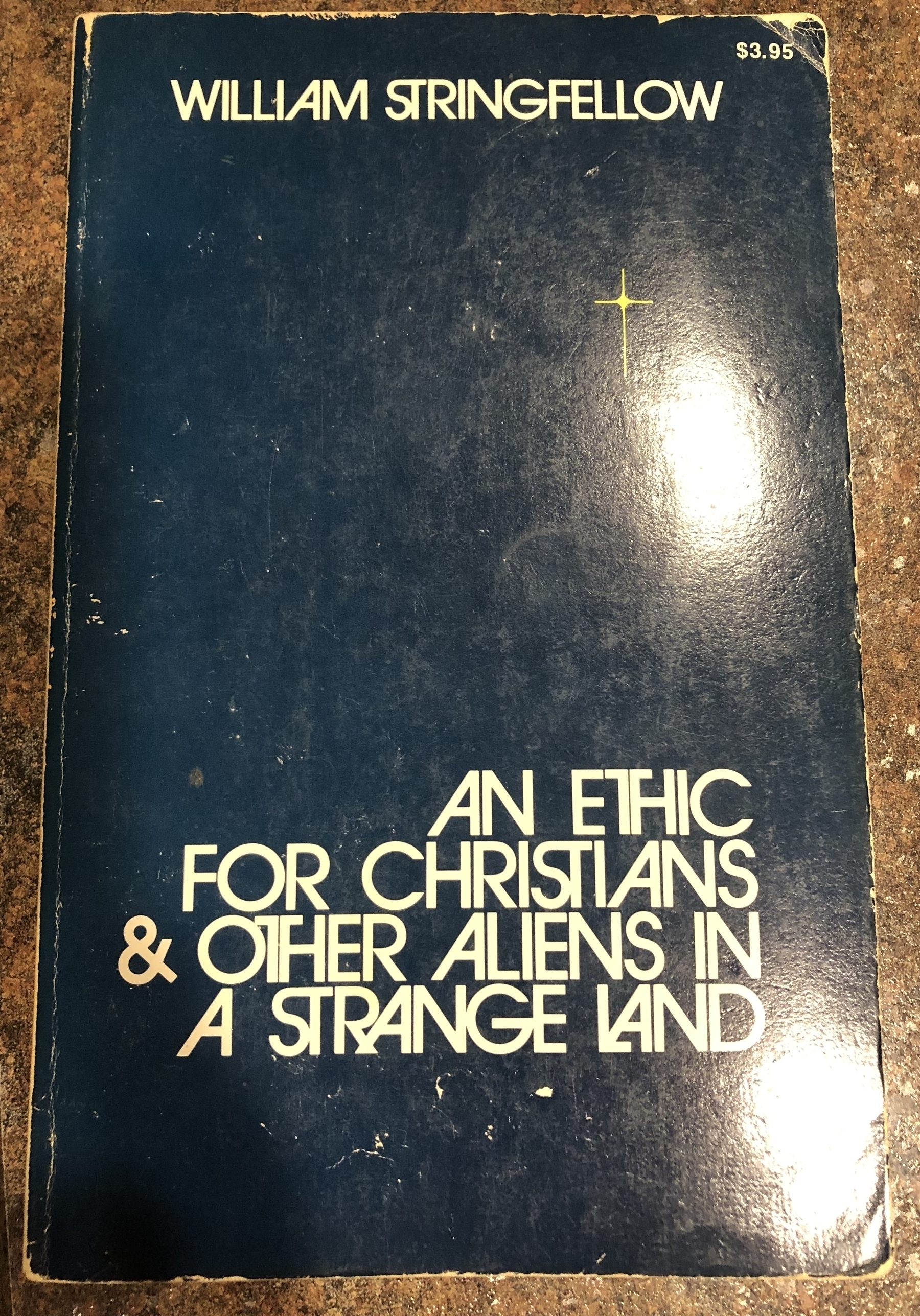
Looking through this book again, which has been and remains influential on me (despite now falling into the “other aliens” side of the title). To me, religion loses its life precisely when it shifts from the prophetic to the institutional mode. Stringfellow explains why.
A few updates on Green Man’s Grotto:
We finished all the transplants mentioned here and both of the original raised beds have been doubled in depth. The third, newish raised bed has been cleared of everything except Purple Poppy Mallow (aka, Winecups) at each end. The only thing remaining to be done on the grape arbor is the addition of some trellis on the sides (for plants other than grapes) and painting.
We started vermicomposting sometime in July 2022. We ordered our worms from Uncle Jim’s and set up a bin using a Rubbermaid container. I would definitely recommend that method as an entry point for people. It’s low cost—especially if you have spare Rubbermaid containers sitting around—and it’s a great way to recycle kitchen scraps and junk mail. There are plenty of YouTube videos for reference.
Vermicomposting and regular composting use pretty much the same rules on what kitchen scraps can be used.
Want to help regenerate your local ecosystem but circumstances limit what you can do at home? Look for volunteer opportunities with local land trusts or native plant societies. Pick up trash and pull invasive species while hiking. Participate in community gardens.
Helpful video comparing both health benefits and environmental impacts of dairy and plant-based milks. Short answer: if you don’t have any individual conditions that require one over another, oat or soy milk are best.
Dana O’Driscoll:
Another challenge that many of us trying to move into sacred action face is what I call the “free-range fantasy.” In the same way that many people of previous generations were lured into the “white picket fence” narrative in the United States, those interested in sustainable living are often lured into the free-range fantasy today. The narrative goes something like this: You and your perfect partner decide to quit your day jobs, purchase 30 acres in some remote area debt free, and build a fully off-grid homestead complete with solar panels, acres of abundant gardens, fields full of goats, happy free-range chickens, and two cute children covered in strawberry juice.
When reading books or watching documentaries about sustainable, regenerative practices, it is a matter of when, not if, a person will quote Wendell Berry. The impact he has had on the world is amazing. He has had obvious impact on the environmental movement and “back to the land” organic small farms. He was also highly influential on Michael Pollan and Alice Waters—who in turn have become enormously influential.
Yet the Wendell Berry we admire might not have been.
Makes two servings of rich, not overly sweet, hot chocolate. You’ll never use those packages of hot chocolate mix again.
1/4 cup sugar 1/4 cup dark cocoa Pinch salt 1/3 cup hot water 2 cups milk (I use oatmilk) 1 tsp vanilla (Optional) Large glug of Disaronno, Cointreau, or other liqueur Mix sugar, cocoa, salt, and hot water in a sauce pan. Stir frequently (and into the “corners” of the sauce pan because the cocoa will want to clump there) until mixture comes just to a boil.
As I said earlier today, I finished reading In Limestone Country by Scott Russell Sanders. While I was recording that fact in my reading log (which stretches back to 2005!), I realized that it was the first book I’ve finished since April. To be fair, I’ve been busy and a lot of my reading over the past several months has been articles, etc., aimed at helping Rachel and me with our gardening project.