Posts in: Music

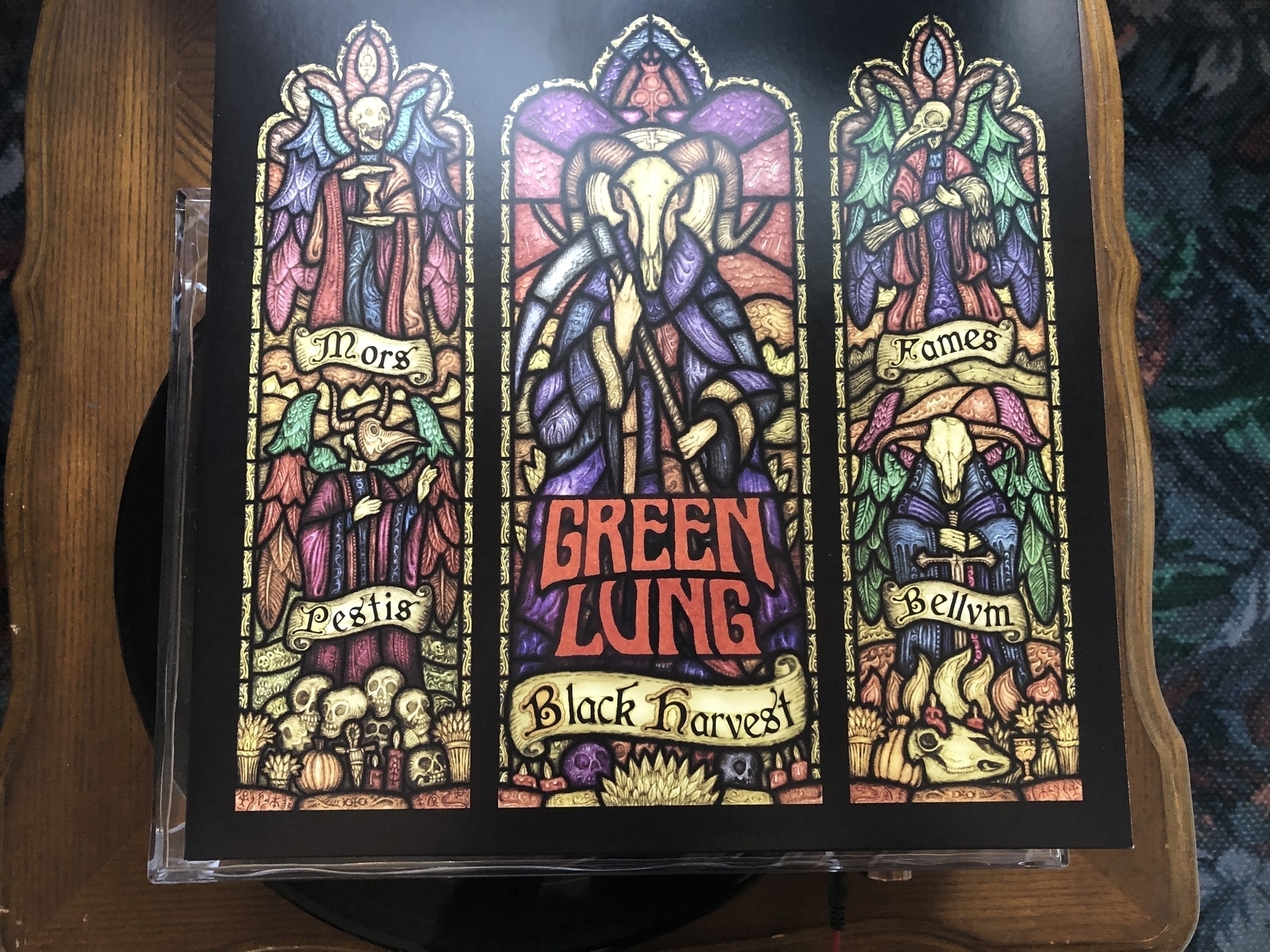
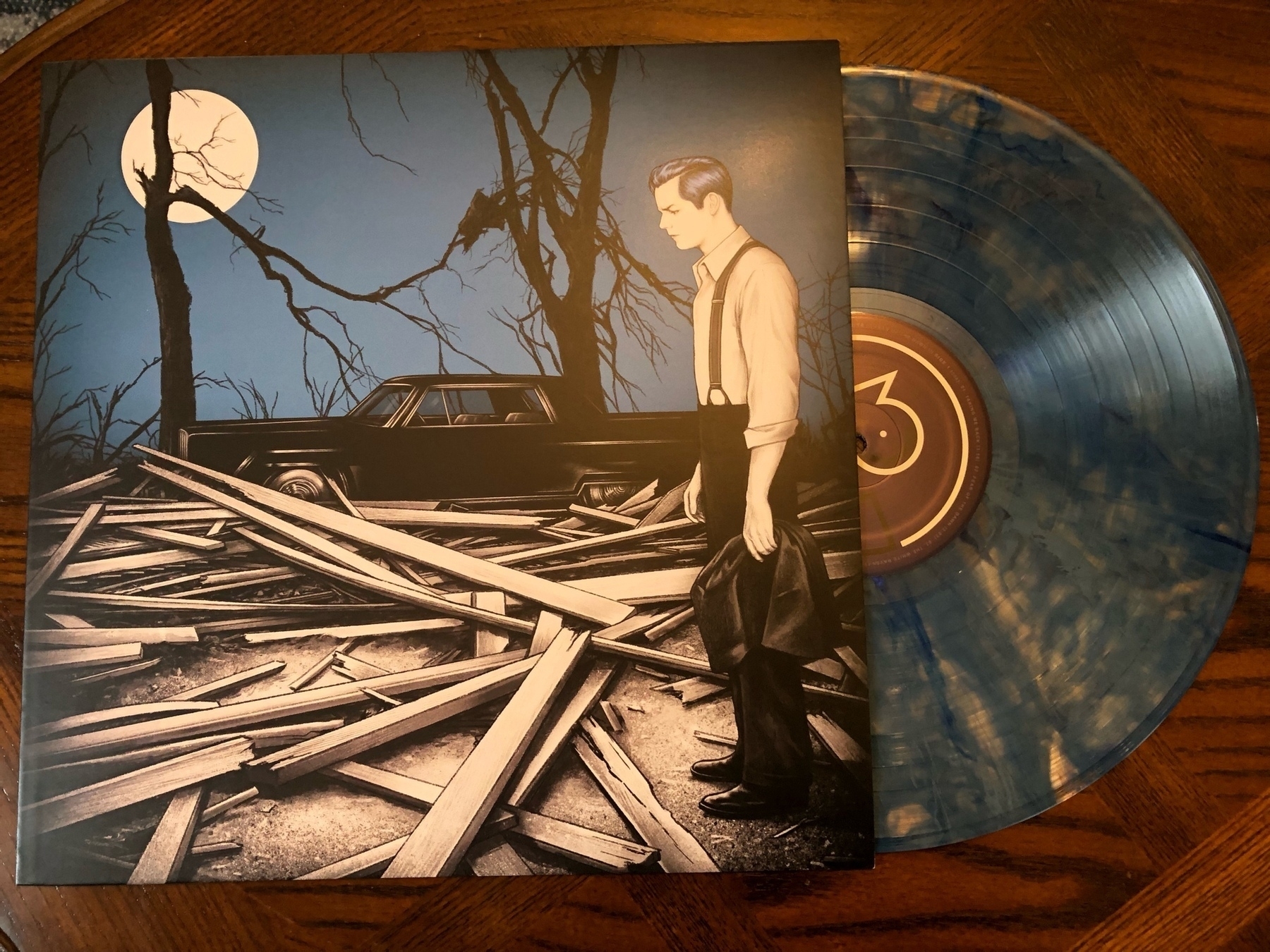
When Rachel gave me a record player for Christmas, she included with it an album of Big Band recordings because she knew that what I primarily wanted out of a record player was the romance of playing this music on it.

There’s a reason for that. When we were first married, our Sunday night after-church ritual was to eat fast food with friends. (The iron-clad digestive system of youth…) But we had to keep an eye on the time because we needed to leave in time to catch “Big Band Jump,” a syndicated radio show on our local AM station which we would listen to on the drive home and while we got ready for bed. Then once we were in bed we would listen to an old-time radio show performing all sorts of mystery and thriller stories. (I can’t remember its name - maybe it was rebroadcasts of CBS Radio Mystery Theater?)
While that story makes it sound like we were married in 1948 instead of 1998, it’s one of my fondest memories of those early days of our marriage. Big Band music already has a certain romance to it, but add to that two newlyweds in a small apartment listening to music and stories from their grandparent’s time and you have a sonic impression that lasts.


Austin Kleon mentioned Betty Davis on the occasion of her death a few days ago - and what I want is know is how I lived 45 years on this earth without hearing her music? 🎵


The Black Belt was a region in the American South known for its rich, black soil. It was home to many cotton plantations and, consequently, enslaved black people. During the Great Migration, large numbers of black people moved out of the South into northern cities, taking the blues and other cultural creations with them. Not all moved, though. Alabama Blackbelt Blues is a documentary by Alabama Public Television on the continuing blues tradition in Alabama’s portion of the Black Belt. (Watch the trailer here.)

If you like the blues, you’ll like this documentary - simple as that. It’s given me a whole list of singers and musicians to listen to. And, unsurprisingly, the names of John and Alan Lomax come up regularly as collectors and preservers of this music. I plan to explore their collections more thoroughly soon.

Listen: “Trouble So Hard” by Vera Hall


Now spinning: D-Vine Spirituals. It’s a new release of recordings of Black gospel groups from the seventies and if any of those words light you up, you’ll love this album. It’s also available digitally, of course, in all the usual places.


Rob Sheffield says the CD revival is here. I’m going to stick with collecting records for now, but this makes a good argument for the CD. “Look, CDs will never be as sexy as vinyl albums. I get that. … Really, there’s only one thing CDs have ever done right, which is make music. They get the job done, which is why they’re still around.”


In response to a recent post I wrote mentioning zines, @lewism pointed me to an episode of Rolf Potts’ podcast in which he discusses mixtapes, those homebrews of (chiefly) the eighties. I made a few mixtapes myself in the old days but, being a fundamentalist child, they were mainly of southern gospel quartets, that is to say, lame in the extreme.

(Explaining all this to our daughter Darcy, who was born after we left fundamentalism, I went down a quartet music rabbit hole on YouTube. Eventually she fled the living room. I’m sure our YouTube recommendation algorithms are thoroughly confused and will take some time to recover.)

I also watched the documentary discussed by Rolf Potts, Cassette: A Documentary Mixtape.

“Cassettes didn’t play a \*role\* in hip-hop in the early days. Cassettes \*were\* hip-hop.”

The documentary outlines the history of the cassette and the revolutionary impact it had. For the first time, it was possible to record at home: songs from the radio or other cassettes, found sound, and - crucially - your own music. And, as you can see in the documentary, this homebrew tradition continues into the present day.

Among young aficionados of cassettes, the attraction is surely the ability to record music at very low cost, together with the hipster weirdness of using obsolete technologies. Among older cassette lovers, there is likely the additional factor of nostalgia. I’ve seen a similar dynamic in myself as I’ve been listening to records since Christmas. Records - especially older ones - definitely don’t have the clean sound of digital music. There are flaws that cause them to skip and hiss. As a physical medium, a record carries time within itself. On the other hand, each time digital music is played it is an experience ex nihilo, as if you stand with the angels at the moment of creation. That is not nothing - and is definitely an argument in favor of digital music.

Nevertheless, records and cassettes have an element of wabi-sabi to them. (Important caveat: I have no expertise on this subject and it is not from my culture. Whatever I say here should be seen as provisional and open to correction.) Some attempts at a definition of wabi-sabi:

  • The honoring of “imperfection, brokenness, and decay.” The belief that “a thing gets more beautiful as it gets scarred from use and imbibed with its own story.” (David Duchemin, Start Ugly)
  • The “acceptance of transience, nature and melancholy, favouring the imperfect and incomplete in everything” (Lilly Crossley-Baxter, “Japan’s unusual way to view the world”)

Sculpture by Kazunori Hamana; photo by Lily Crossley-Baxter Sculpture by Kazunori Hamana; photo by Lily Crossley-Baxter

  • The “beauty in the imperfections found as all things, in a constant state of flux, evolve from nothing and devolve back to nothing.” (Andrew Juniper, Wabi Sabi: The Japanese Art of Impermanence)
  • “The beauty of the withered, weathered, tarnished, scarred, intimate, coarse, earthly, evanescent, tentative, ephemeral.” (Crispin Sartwell, Six Names of Beauty)

Over time, physical mediums for music acquire imperfections and scars that speak of their history - even if we don’t know that history ourselves. When I am listening to an old record, I imagine previous owners sitting in their living rooms, laying in their bedrooms, doing any number of things while listening to this very record. What was going on in the life of that person when they first pulled the record from its sleeve? Was this piece of vinyl important to them?

I am not saying anything as simplistic as “physical good, digital bad.” What I am saying is that perhaps a digital self, a digital life, experience mediated by digital technology, is too thin to be fully satisfactory. Perhaps we have over-emphasized experience via the mind, forgetting that we are bodies and that human life is intimately connected to the wear and tear of physicality.

Other links:


🎵 Now spinning. I first heard Robert Finley on the Colbert show a few days ago and fell in love with his wonderful voice and grandpa dancing. Bonus: this album was produced by Dan Auerbach of the Black Keys, so that’s a shot of extra confidence in its quality.