In 1773, Ann Lee and other Shakers were arrested for causing a disturbance during a service at Christ Church in Manchester. Afterwards she was questioned by ministers.
Richard Francis, Ann the Word:
Once when recounting the tale of this religious interrogation, Ann said she spoke for four hours and the ministers - the ‘greatest in those parts’ (suddenly we hear the illiterate daughter of a blacksmith talking) - ‘said that I spoke in seventy two different tongues, and that I spoke them more perfect than any in their knowledge were able to do. After this they tried to persuade me to teach the languages; but I did not regard their flatteries.’
These priests, ‘great’ or not, seem to have been rather more naive than was Timothy Dwight, President of Yale, when he went to visit the Shaker community in New Lebanon in upstate New York more than a quarter of a century later, in 1799. He heard a woman speaking in tongues and pointed out to her that she was making sounds that were not articulated, and which therefore could not be called words. She replied, ‘How dost thee know but that we speak the Hotmatot language? The language of the Hotmatots is said to be made up of such words.’ Dwight suggested that it would be simple enough to do a test if instead of speaking Hottentot they essayed a more familiar language, like Greek, Latin or French, but the woman wisely declined. An eccentric commentator called Thomas Brown, who was fascinated by Shakerism and who joined the sect for a while, described, indeed transcribed, his own experience of speaking in tongues at about the same time as the woman who spoke to Dwight: ‘Hiero devojirankemango, adgileabono, durem subramo, devir-anto diacerimango, Jaffa vah pe cu evangalio; de vom grom seb crinom, as vare cremo domo’, the commas adding a nicely fussy touch. Brown makes a shrewd point about the serendipity involved: ‘When a person runs on in this manner of speaking for any length of time. I … thought it probable that he would strike into different languages, and give some words in each their right pronunciation.’ In other words, this apparent gibberish is an oral equivalent of the eternal monkey at the typewriter.
The snideness of the writer annoys me so, hey ho, let’s get into it.
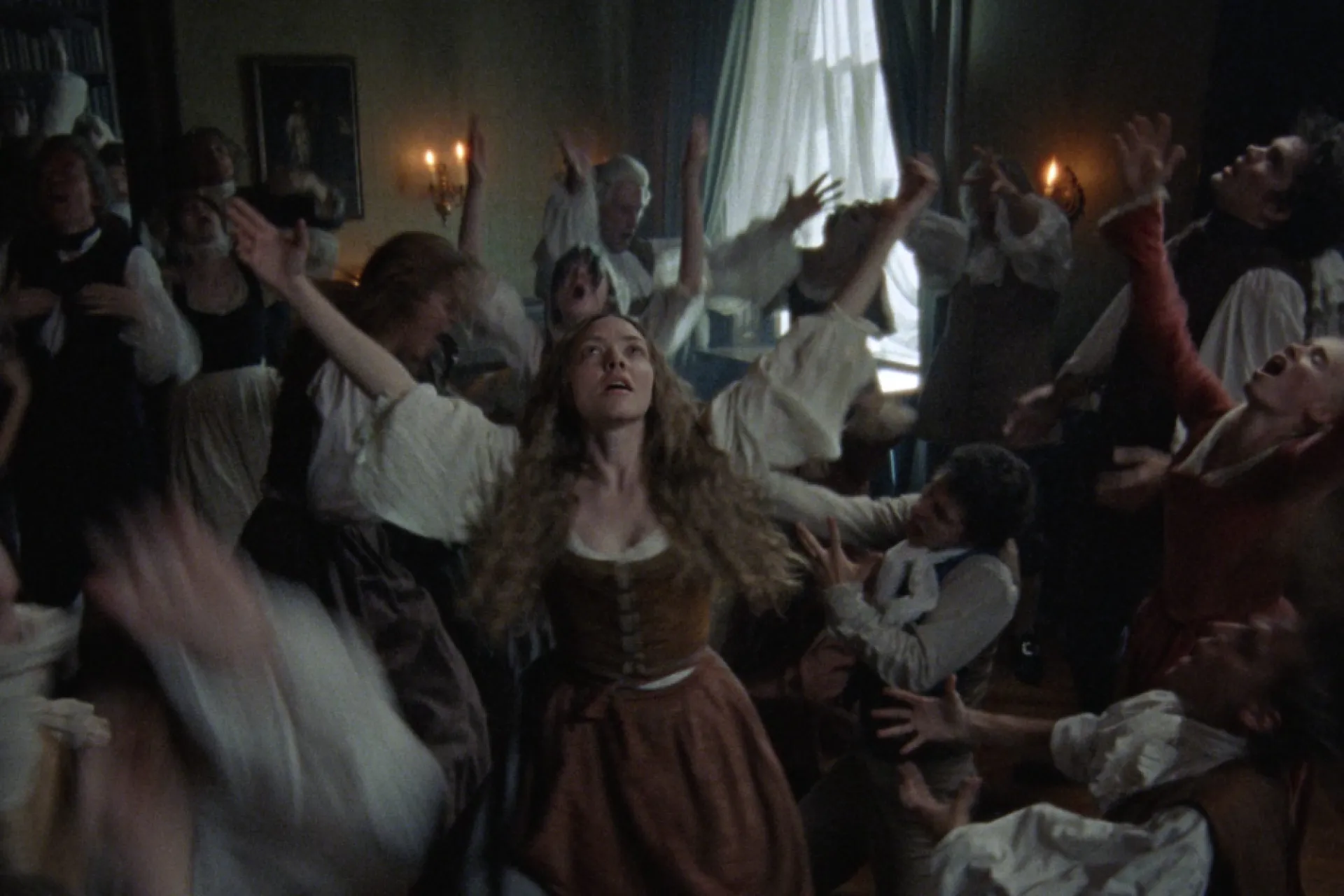
I spoke in tongues many times as a teenager and young adult. I’m in the somewhat odd position of believing the experience was genuine in some sense of the word while being in zero danger of becoming a Pentecostal again. I do find it strange to talk about my experience directly but, if I don’t, the only discussion of speaking in tongues you’re likely to hear is from Pentecostals themselves, social scientists, or skeptics.
It’s worth noting that the Holiness people were insistent that tongues were not taught. Holiness people regarded as blasphemers the “modern” Pentecostals and Charismatics who practiced a sort of “fleshly” babbling with the hopes that the Holy Ghost would take over—or even worse, tried to “learn” how to speak in tongues. True speaking in tongues was only ever ecstatic.
I can tell you firsthand that it happened, and not rarely. It was my experience (and I can only speak of my experience) that the moment my rational mind kicked in, the experience stopped, like shutting off a tap. The experience was essentially trance-like.
Speaking in tongues was considered the evidence of the baptism of the Holy Ghost, which was a pivotal and highly sought after experience of Holiness people. People would pray for days and weeks for “the baptism”. It was a fixture of youth camps, since the baptism was an experience considered essential for staying true to the faith—a perennial problem for young people. Consequently, there developed a set of practices that set the right conditions for the experience. Not a formula (God forbid). A method, not unlike trance practices around the world.
- Pray out loud
- Kneeling or standing
- With your head up
- And your arms raised.
- Praise God incessantly
- With an open heart
- And the Holy Ghost will take over your tongue.
This initial experience was generally a matter of time and persistence. Rarely did it come quickly. Almost every Holiness person has had the experience of gathering around a seeker and praying with them, encouraging them, for hours on end. I went to a lot of youth camps as a teenager, so I put in my time too.
Once a person received the baptism of the Holy Ghost, speaking in tongues became a somewhat common experience. Any time the Holy Ghost “moved” in a service, people would start dancing, running, jumping, and speaking in tongues. This didn’t happen every service, but if it didn’t happen every few services, a church might get the reputation for being dead.
Even to us at the time, there were a few people whose speaking in tongues sounded suspiciously like simple tongue trilling or babble. We suspected they might be acting in “the flesh”. “Try the spirits, whether they be of God.”
Sometimes, though, a message in tongues would strike like a lightning bolt in a service, with an interpretation in English following. The church, suddenly addressed directly by God. Those could be electrifying moments.
I never thought I was speaking in a known human language. If you would have pressed me, I would have said I was speaking in a “heavenly” language. In my recollection, though, it wasn’t ever an issue. We heard stories of Acts 2-like experiences where missionaries would speak to a foreign audience in their own native language but that would have been considered extremely rare.
I propose a rule: Never believe an experiencer’s explanation of their extraordinary experience. Remember the response of the dancer when asked what her performance meant? “If I could tell you, I wouldn’t have needed to dance it.” Explanations break the experience, because anything extraordinary is beyond words.
Mother Ann and the Shaker sister in Lebanon speculating about the languages they were speaking is a sort of code switching. They are attempting to explain the non-rational in rational terms, which always fails. And it exposes the experience to asinine commentary by biographers and Yale presidents.
Religious experience, including but not limited to ecstasy, is best left underexplained. It is sufficient for me to understand my experience as an example of a universal, if strange, experience. I look back on my experience with curiosity and gratitude. It was real, not fake, even though I no longer understand it the way I did then. I don’t expect to ever have that experience again. Religious ecstasy, though—that’s something I’ve never stopped pursuing.