David Cain:

One financial lesson they should teach in school is that most of the things we buy have to be paid for twice.

There’s the first price, usually paid in dollars, just to gain possession of the desired thing, whatever it is: a book, a budgeting app, a unicycle, a bundle of kale.

But then, in order to make use of the thing, you must also pay a second price. This is the effort and initiative required to gain its benefits, and it can be much higher than the first price.


Last night I was walking through Donaldson Woods, one of the few remaining stands of old-growth forest remaining in Indiana, and thought to myself, “What’s new with pantheism?”

So once I regained cell phone reception, I found this book by Mary Jane Rubenstein. Also, this video of her is well worth a few minutes of your time: “Why We Need Pantheism”.


From David Cain:


If the ability to tell right from wrong should turn out to have anything to do with the ability to think, then we must be able to ‘demand’ its exercise from every sane person, no matter how erudite or ignorant, intelligent or stupid, he may happen to be.

Hannah Arendt, as quoted by Samantha Rose Hill in her essay “Thinking is Dangerous”. The essay is part of a newly announced project on Hannah Arendt that includes events and a podcast.

I recommend Samantha Rose Hill’s Substack.

I also recommend Richard J. Bernstein’s book Why Read Hannah Arendt Now?

Rachel and I recently watched an excellent film about Arendt. (I came across an article challenging its historical accuracy so perhaps don’t wholly rely on it.)

Finally, to round this out, I’m including below some notes I made a few years ago on one of Arendt’s essays.

In “Truth and Politics” (pdf), Hannah Arendt discusses the vulnerability of facts. Facts are contingent; events may have happened otherwise. Unlike mathematical truth, facts are not axiomatic. If facts are suppressed or distorted, they may not be recoverable.

_Facts can be inconvenient: “Facts are beyond agreement and consent. … Unwelcome facts possess an infuriating stubbornness that nothing can move except plain lies.” Given this and the vulnerability of facts, political power is a particular danger. “The chances of factual truth surviving the onslaught of power are very slim indeed”. _

_Facts may be suppressed and forgotten over time, but modern technology makes a 1984-style memory hole difficult. More likely is the strategy of transforming facts into opinions. When the liar cannot make his lie stick, he “does not insist on the gospel truth of his statement but pretends that this is his ‘opinion,’ to which he claims his constitutional right.” _

Another way political power may defeat facts is through the use of “organized lying”. Because facts describe events that could have been otherwise, an equally plausible counter-narrative can be fashioned by political power. “Since the liar is free to fashion his ‘facts’ to fit the profit and pleasure, or even the mere expectations, of his audience, the chances are that he will be more persuasive than the truthteller.”

_The consequence of such widespread substitution of lies for truth is that “the sense by which we take our bearings in the real world - and the category of truth vs. falsehood is among the mental means to this end - is being destroyed. … Consistent lying, metaphorically speaking, pulls the ground from under our feet and provides no other ground on which to stand.” _

Or, as Yeats wrote:

Turning and turning in the widening gyre

The falcon cannot hear the falconer;

Things fall apart; the centre cannot hold


David Cain:

Self-imposed rules aren’t constraints, they’re good decisions made in batches.

That is a smart line.


After reading this post on canonical address books by @annahavron, it occurred to me that something like a physical record of important information that could be referenced by someone upon our deaths would be a great idea. I mentioned this to my wife Rachel and she said she saw something like that at our local bookstore and - after some searching - we found I’m Dead. Now What?, an organizer built for this very thing. We’ve ordered one for ourselves and one for our in-laws. I feel like Caitlin Doughty would be proud.


Oliver Burkeman on the reality distorting effects of the attention economy:

As you surface from an hour inadvertently frittered away on Facebook, you’d be forgiven for assuming that the damage, in terms of wasted time, was limited to that single misspent hour. But you’d be wrong. Because the attention economy is designed to prioritize whatever’s most compelling - instead of whatever’s most true, or most useful - it systematically distorts the picture of the world we carry in our heads at all times. It influences our sense of what matters, what kinds of threats we face, how venal our political opponents are, and thousands of other things - and all of these distorted judgments then influence how we allocate our offline time as well. If social media convinces you, for example, that violent crime is a far bigger problem in your city than it really is, you might find yourself walking the streets with unwarranted fear, staying home instead of venturing out, and avoiding interactions with strangers - and voting for a demagogue with a tough-on-crime platform. If all you ever see of your ideological opponents online is their very worst behavior, you’re liable to assume that even family members who differ from your politically must be similarly, irredeemably bad, making relationships with them hard to maintain. So it’s not simply that our devices distract us from more important matters. It’s that they change how we’re defining “important matters” in the first place. In the words of philosopher Harry Frankfurt, the sabotage our capacity to “want what we want to want.”

Four Thousand Weeks p. 96-97


This is a great post that I needed to read today. “My point isn’t that we’re not living in a Diet Dystopia, because I believe we are, but that my cynicism isn’t at all helpful. All it does is make me bitter and unpleasant, like a Caffeine Free Diet Coke.”

I Welcome Your Performance hypertext.monster

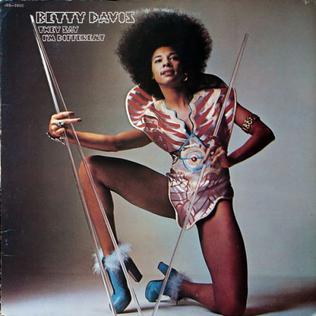
When Rachel gave me a record player for Christmas, she included with it an album of Big Band recordings because she knew that what I primarily wanted out of a record player was the romance of playing this music on it.

There’s a reason for that. When we were first married, our Sunday night after-church ritual was to eat fast food with friends. (The iron-clad digestive system of youth…) But we had to keep an eye on the time because we needed to leave in time to catch “Big Band Jump,” a syndicated radio show on our local AM station which we would listen to on the drive home and while we got ready for bed. Then once we were in bed we would listen to an old-time radio show performing all sorts of mystery and thriller stories. (I can’t remember its name - maybe it was rebroadcasts of CBS Radio Mystery Theater?)

While that story makes it sound like we were married in 1948 instead of 1998, it’s one of my fondest memories of those early days of our marriage. Big Band music already has a certain romance to it, but add to that two newlyweds in a small apartment listening to music and stories from their grandparent’s time and you have a sonic impression that lasts.


Started reading Four Thousand Weeks by Oliver Burkeman. 📚 Quoting Seneca, Charles Eisenstein, and Marilynne Robinson all in the introduction? He’s singing my song.