JeffersCast Episode Two: “Hurt Hawks”
This episode includes a reading of “Hurt Hawks,” followed by a few comments.
This episode includes a reading of “Hurt Hawks,” followed by a few comments.
Introducing JeffersCast, my wildly amateur podcast (using micro.blog’s wavelength app) about the work of Robinson Jeffers. First up, a reading of “Carmel Point” followed by a few comments.
David Hinton’s new book is an exploration and treatment of the wound deep in our culture—the illusion of separateness from the natural world. Our Greek and Christian cultural inheritance tells us that we are spirit-centers standing outside and above our fellow-travelers on the planet and our truly important kinship is with the divine, immaterial world. The result has been climate change, deforestation, pollution, mass extinction, and the malaise within humans themselves.
David Hinton: Within the West’s epochal cultural transformation, [Robinson] Jeffers held a crucial place. Although caught in the terminological limitations bequeathed him by his pantheistic forebears, he was a radical step beyond them. His vision was fundamentally post-Christian, for it was not at all human-centered. He valued wild earth in and of itself, for its own self-realization—not for how it can benefit or inspire humanity. And from this came Jeffers’ earth-based ethics—that we should love the whole, not the human alone—an ethics that led him to say “I’d sooner, except the penalties, kill a man than a hawk.
Happy belated solstice, everyone. We’re at the turn of the year – days start getting shorter and the heat really cranks up here in Indiana. I had good intentions of posting daily about vacation but obviously that didn’t work out. Flying to California As previously noted, we had some problems getting to San Francisco – but nothing like what was to come. (Cue ominous music.) San Francisco We already weren’t planning a lot of time for San Francisco but, with the additional delay, we basically just had one day.
Visiting Tor House and Hawk Tower, home of Robinson Jeffers and his wife Una, was an amazing experience yesterday. I still can’t believe I was there, got to sit at his writing desk and climb to the top of Hawk Tower (second picture is the view of the Pacific from the top).
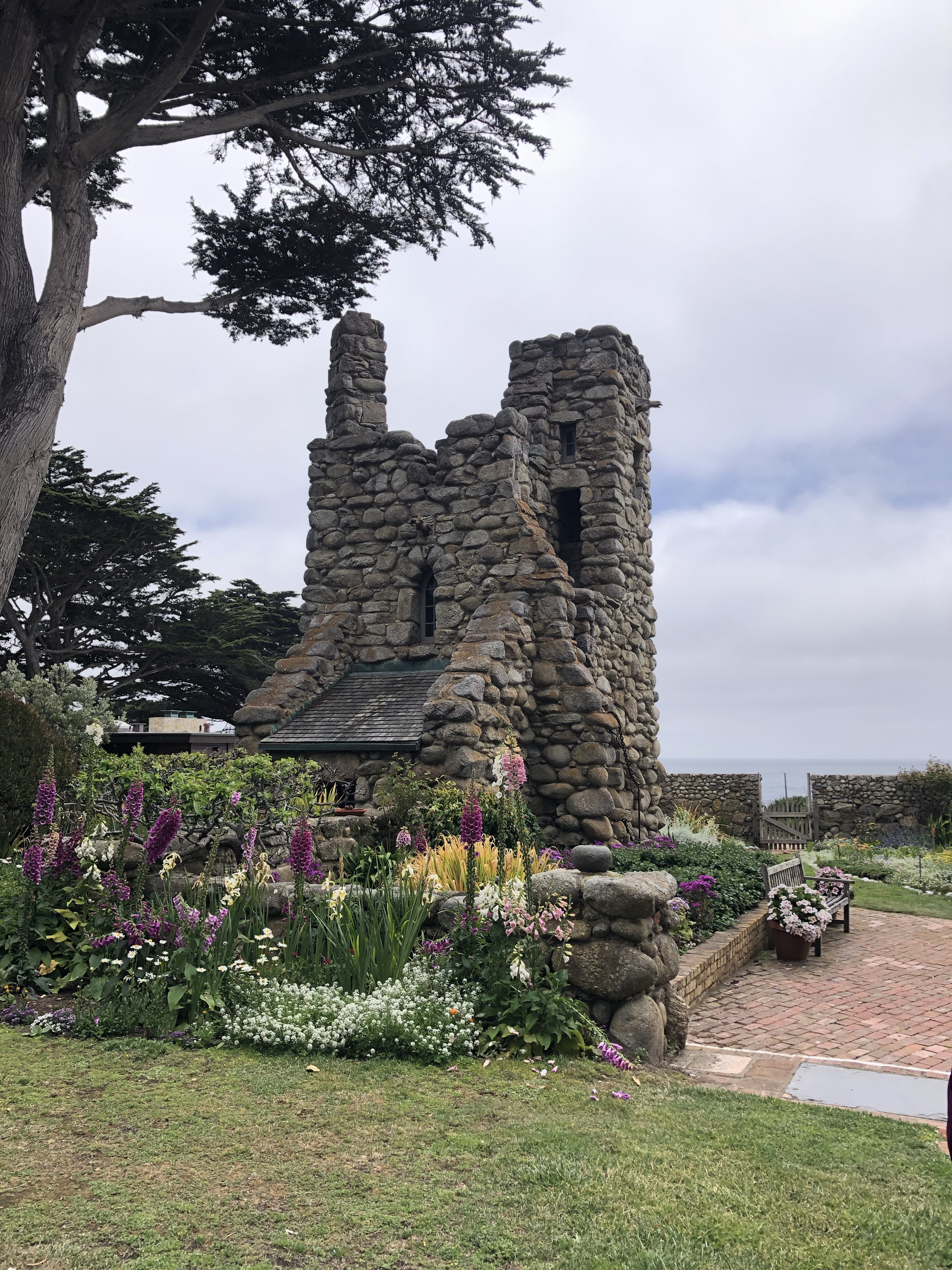
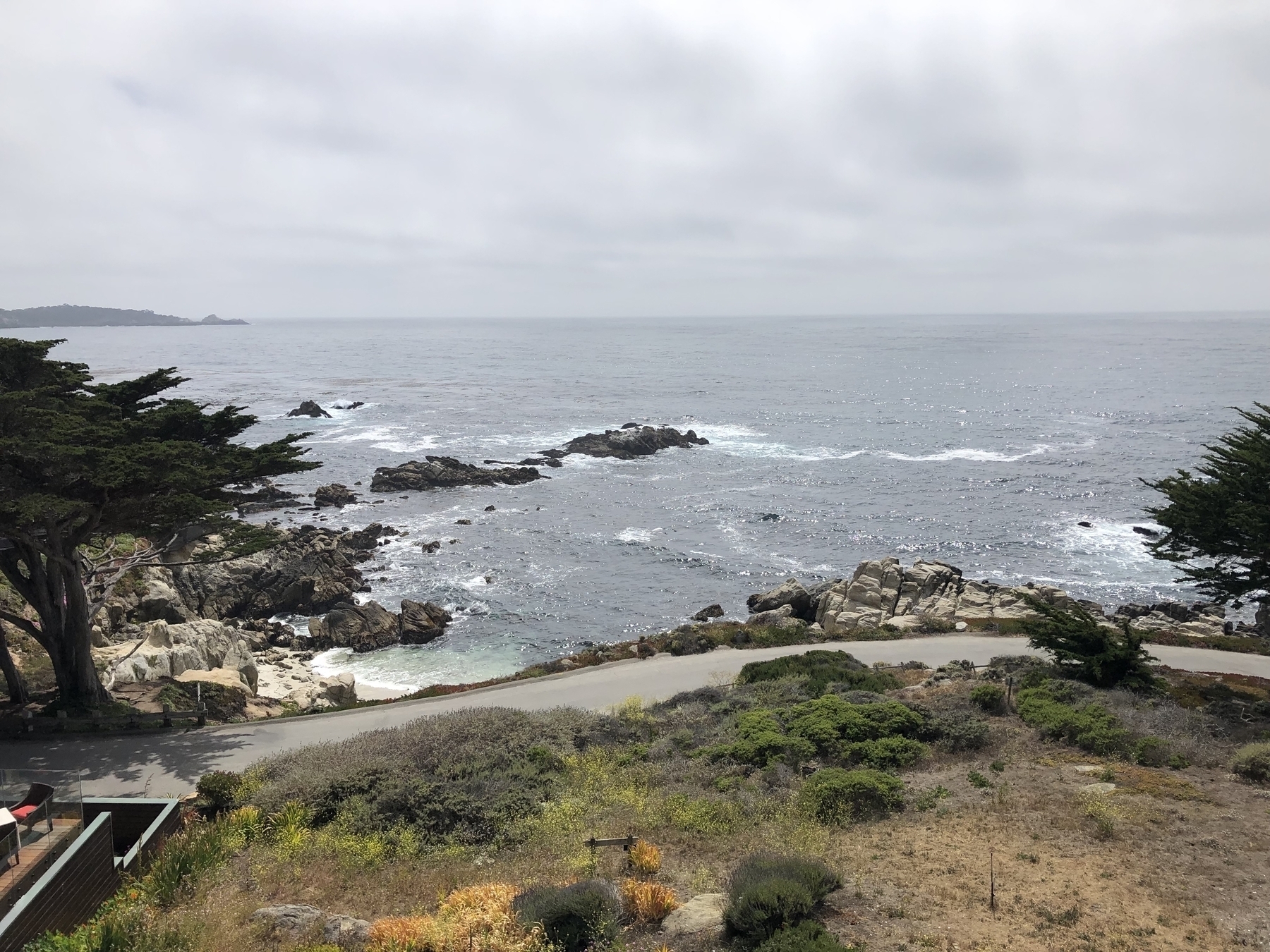
Nevertheless, I’ll be looking for you tomorrow, Jeffers.
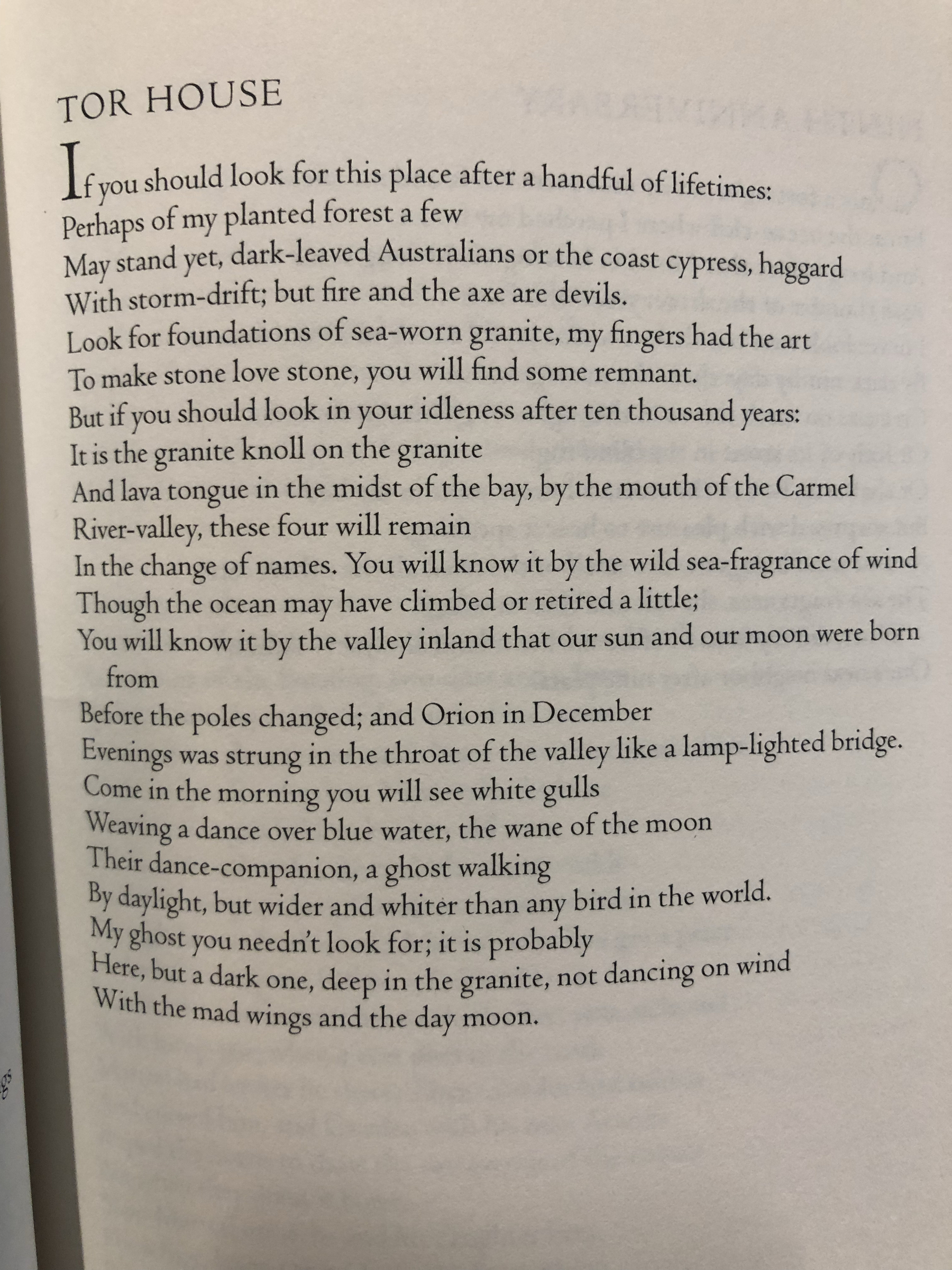
In the stirring closing lines of Carmel Point, Robinson Jeffers writes: We must uncenter our minds from ourselves; We must unhumanize our views a little But how is this to be done? One way is surely as a philosophical practice that builds ways of thinking with the more-than-human world instead of thinking about it. That is essential. Yet for those of us who tend to live too much in our own heads, what practical actions can be taken?
Pretty excited to get confirmation of our tour of Tor House, the home of poet Robinson Jeffers, during our upcoming trip to California.
Introductory note: This poem surely lies behind what I’ve written lately about self-consciousness (here, here), even if I didn’t have it in mind at the time. Jeffers describes consciousness here as “unreasonable excess, / Our needless quality”, a characteristic that must arise in some way from our biology but is also outside it. He imagines our bodies and our consciousness as the creations of two gods (hello, Gnosticism!). The “uncalled for God” (demiurge?) adds consciousness on top of the natural beauty created by the “austerer God” (monad?). Consciousness becomes a burden for human beings, the poison in the well that corrupts all our experience.
I.
What catches the eye the quick hand reaches toward
Or plotting brain circuitously secures,
The will is not required, is not our lord,
We seek nor flee not pleasure nor pain of ours.
The bullet flies the way the rifle’s fired,
Then what is this unreasonable excess,
Our needless quality, this unrequired
Exception in the world, this consciousness?
Our nerves and brain have their own chemic changes,
This springs of them yet surely it stands outside.
It feeds in the same pasture and it ranges
Up and down the same hills, but unallied,
However symbiotic, with the cells
That weave tissues and lives. It is something else.
II.
As if there were two Gods: the first had made
All visible things, waves, mountains, stars and men,
The sweet forms dancing on through flame and shade,
The swift messenger nerves that sting the brain,
The brain itself and the answering strands that start
Explosion in the muscles, the indrinking eye
Of cunning crystal, the hands and the feet, the heart
And feeding entrails, and the organs that tie
The generations into one wreath, one strand;
All tangible things or chemical processes
Needs only brain and patience to understand:
Then the other God comes suddenly and says
“I crown or damn. I have different fire to add.
These forms shall feel, ache, love, grieve and be glad."
III.
There is the insolence, there is the sting, the rapture.
By what right did that fire-bringer come in?
The uncalled for God to conquer us all and capture,
Master of joy and misery, troubler of men.
Still we divide allegiance: suddenly
An August sundown on a mountain road
The marble pomps, the primal majesty
And senseless beauty of that austerer God
Come to us, so we love him as men love
A mountain, not their kind: love growing intense
Changes to joy that we grow conscious of:
There is the rapture, the sting, the insolence.
…..Or mourn dead beauty a bird-bright-May-morning:
The insufferable insolence, the sting.