My current and upcoming reading pile 📚 What’s in yours?
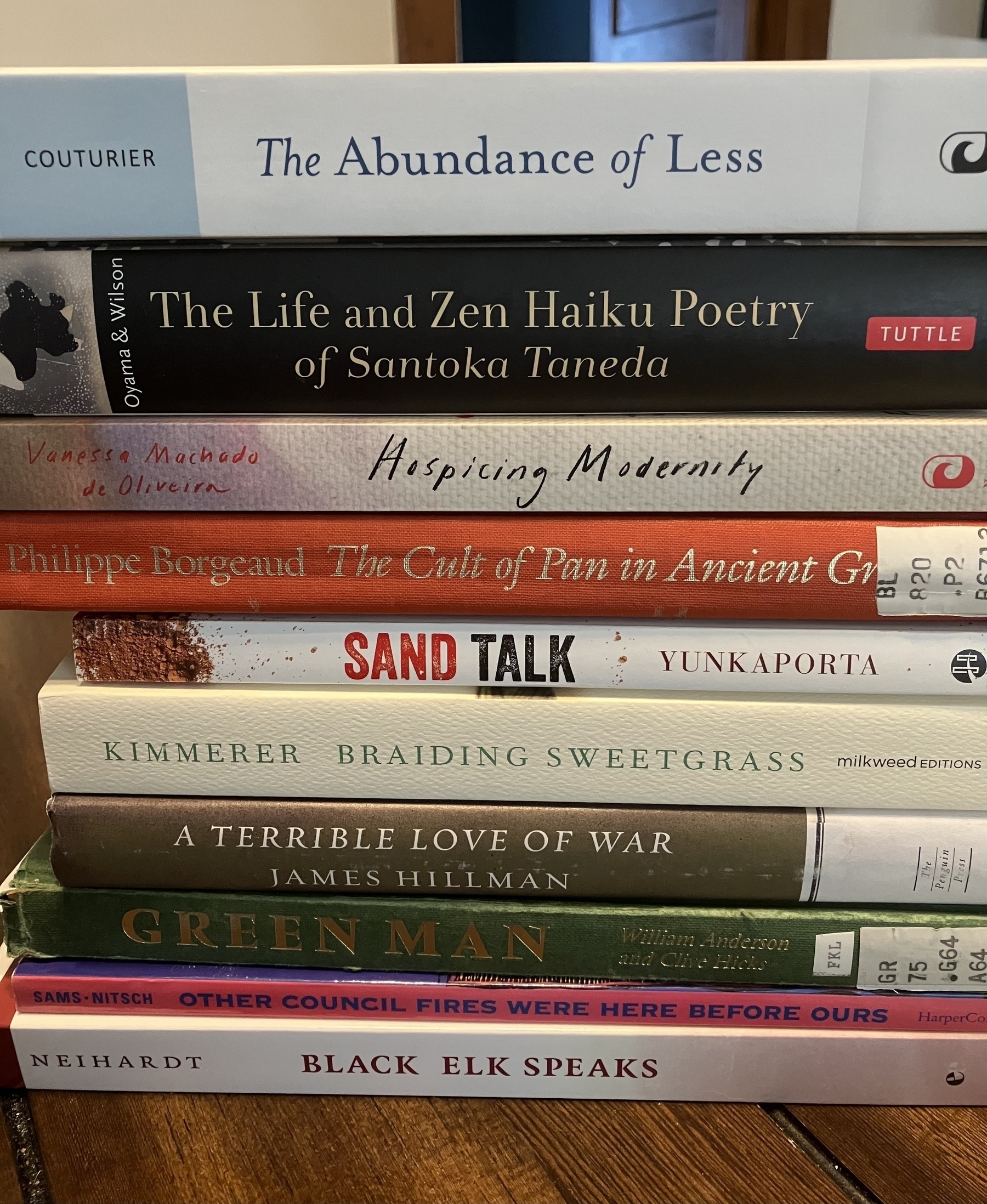
My current and upcoming reading pile 📚 What’s in yours?
Three things that (synchronistically?) fell into my world this week:
“Most people spend their time relating entirely to things that are made solely for the purpose of keeping the economy spinning, of making money for someone, such as television and television shows, and eating food that’s not good for them. And to get that money, everyone throws away their own time that was free before, even if the work they do is not useful. Everyone around them thinks it’s natural and normal. Even though they’re incredibly busy on the physical, body level, moving around all the time, they are empty on the level of spirit.”
“So why do they do it, do you think?”
“Because they don’t stop to consider, Why is it that I as a human am alive?”
The soul of each of us is given a unique daimon before we are born, and it has selected an image or pattern that we live on earth. This soul-companion, the daimon, guides us here; in the process of arrival, however, we forget all that took place and believe we come empty into this world. The daimon remembers what is in your image and belongs to your pattern, and therefore your daimon is the carrier of your destiny.
As explained by the greatest of later Platonists, Plotinus, we elected the body, the parents, the place, and the circumstances that suited the soul and that, as the myth says, belong to its necessity. This suggests that the circumstances, including my body and my parents whom I may curse, are my soul’s own choice–and I do not understand this because I have forgotten.
So that we do not forget, Plato tells the myth and, in the very last passage, says that by preserving the myth we may better preserve ourselves and prosper. In other words, the myth has a redemptive psychological function, and a psychology derived from it can inspire a life founded on it.
I’m so glad to have maintained a log of the books I’ve read since 2005. Not least because it’s such a window into the ways I’ve changed over the years. Anyway, I’ve created a page that lists the books in reverse chronological order. Some gaps are true gaps and some are just record-keeping failures.
Now moving on from a book about limits on tools to one about simpler living.
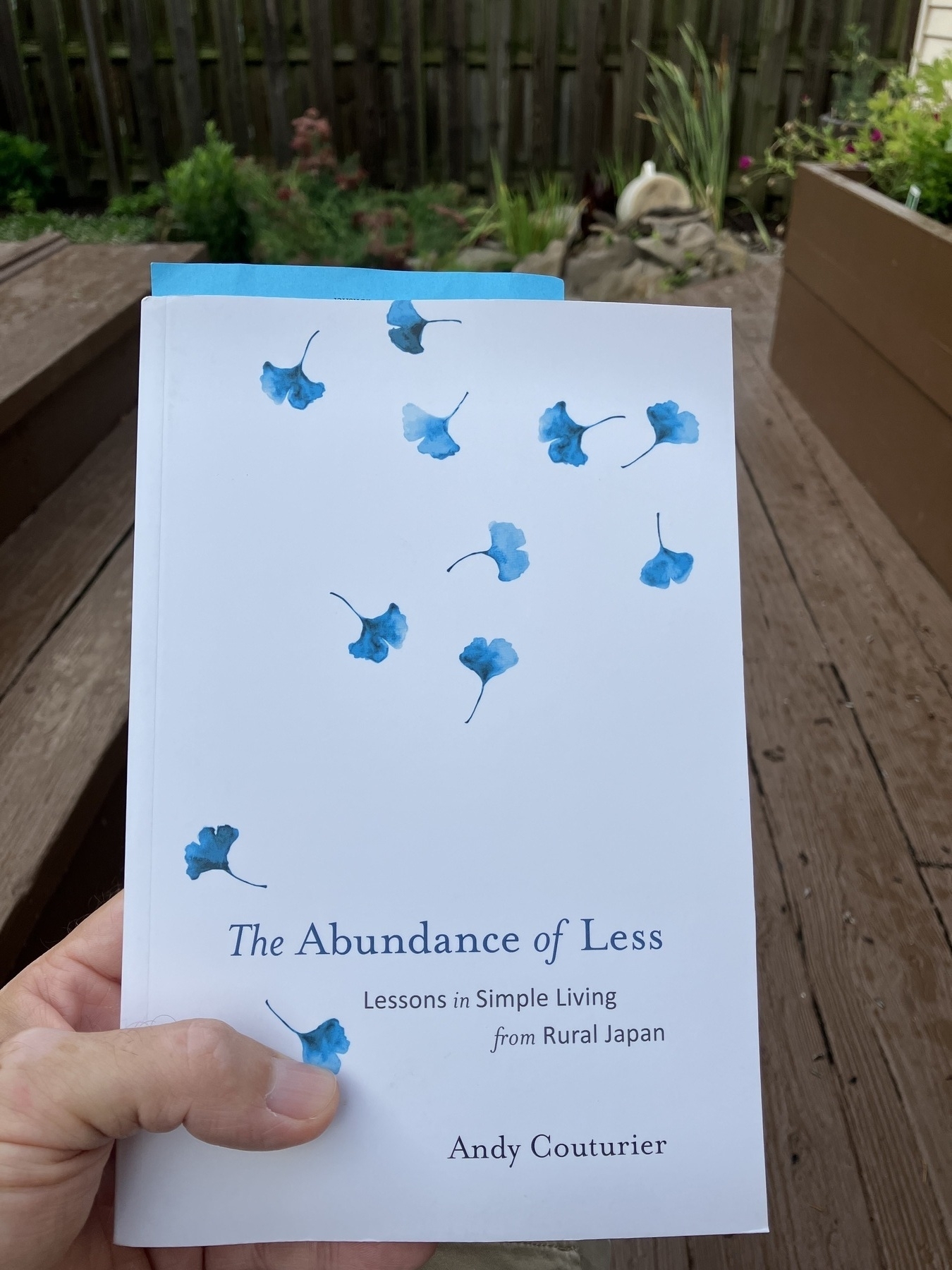
Finished reading Ivan Illich’s Tools for Conviviality. Short book but not a quick read. Dense with ideas that, I believe, are crucial for people concerned about staying human in a time of rapidly accelerating technology.
I’m sad to finish Jung’s Memories, Dreams, Reflections. Next, I would like to at least read The Portable Jung and the Red Book. Any other recommendations for an interested layman?
I could read Memories, Dreams, Reflections all day long. It’s a book full of mysterious visions and dreams from a person who is among the deepest minds of the last few centuries—yet it is completely readable.
When I saw that @ayjay was reading Matthew B. Crawford’s book Why We Drive, it inspired me to revisit Crawford’s Shop Class as Soulcraft, particularly since I’ve started woodworking this year. I read the original article when it came out in 2006 (seventeen years ago!) and was thrilled by it and the book that followed. Rather than completing the re-read, though, I’m moving on to The Word Beyond Your Head, which may be more relevant to what I’ve been thinking about lately.
So Cory Doctorow’s new book is about an accountant?? I’m in. To be fair, it’s a book about a forensic accountant, those Humphrey Bogarts of the accounting world that the rest of us can only admire.
David Hinton’s new book is an exploration and treatment of the wound deep in our culture—the illusion of separateness from the natural world. Our Greek and Christian cultural inheritance tells us that we are spirit-centers standing outside and above our fellow-travelers on the planet and our truly important kinship is with the divine, immaterial world. The result has been climate change, deforestation, pollution, mass extinction, and the malaise within humans themselves.