Posts in: Wendell Berry

Wendell Berry, A Place on Earth:

Margaret has taken off her hat, and put on an apron over the clothes she wore to church. She looks around at Mat and smiles as he comes into the kitchen, and turns back to the stove. She is wearing her grey dress that so becomes her—a pretty woman. He takes that in. He comes into her presence as he would come into the pleasing shadow of a tree—drawn to her, comforted by her as he has been, usually, all his life.

I love portrayals of happy couples in long-term relationships; they’re rare enough, both the fictional and actual. So much fiction and film is taken up with young people in love and middle-aged people in hate.

The calm, steady knowing of long-term love—the gratitude of finding yourself in such a place—it’s a bones-deep feeling of home. I wish there was more of this in the world. I’m deeply grateful that I’m living it with Rachel.


One of the things I appreciate about Wendell Berry’s fiction is the quietness in it. It’s not comforting fiction (or cozy, as the marketers would have it) because there is real pain suffered by the characters. But that pain is endured rather than emoted.


Finished reading Marce Catlett: The Force of a Story by Wendell Berry. Fictionalized account of a formative event in the Berry family, and its impact over generations. Do you really need me to tell you it’s wonderful? 📚


Amish wisdom

From Uncle Wendell’s latest: Since his return, Andy has lived his story and his family’s in that place for sixty years. The place as it was when he returned is no more. It is now, to him, a strange country with a familiar story surviving in it. Port William’s fatal mistake was its failure to value itself at the rate of its affection for itself. Gradually, it had learned to value itself as outsiders—as the nation–valued it: as a “no-where place,” a place at the end of the wrong direction.

Continue reading →


Actor and humorist Nick Offerman on what he has learned from Wendell Berry. When Offerman asked to adapt Berry’s stories for the screen, Uncle Wendell replied:

I like you, and I like your letter, but I consider the whole of my writing to be an ongoing project, and, as such, I’m not interested in seeing anybody else’s take on it.

Thank God for that.


Wendell Berry: “There are no sacred and unsacred places. There are only sacred and desecrated places.”


This morning, pumping gas at the station on the edge of our neighborhood, I felt again what I’ve sometimes felt over the past few years as I’ve turned toward my particular place, and learned to love it warts and all. One of Wendell Berry’s phrases came to mind: “it all turns on affection”:

For humans to have a responsible relationship to the world, they must imagine their places in it. To have a place, to live and belong in a place, to live from a place without destroying it, we must imagine it. By imagination we see it illuminated by its own unique character and by our love for it. By imagination we recognize with sympathy the fellow members, human and nonhuman, with whom we share our place. By that local experience we see the need to grant a sort of preemptive sympathy to all the fellow members, the neighbours, with whom we share the world. As imagination enables sympathy, sympathy enables affection. And it is in affection that we find the possibility of a neighbourly, kind, and conserving economy.


Good interview with Mary Berry, daughter of Wendell Berry and executive director of the Berry Center:

To my mind, the agrarian ideal—the idea that we live in a land ethic, that what’s good for the health of the land is good for us—all that is true, it turns out. So, we tell our students here, If you want to farm, you’re going to have to learn to take absolute pleasure in the place that you are. I think if you can learn to be satisfied and fascinated by the place where you are, contentment is possible, and from contentment, it seems to me, joy is then possible.


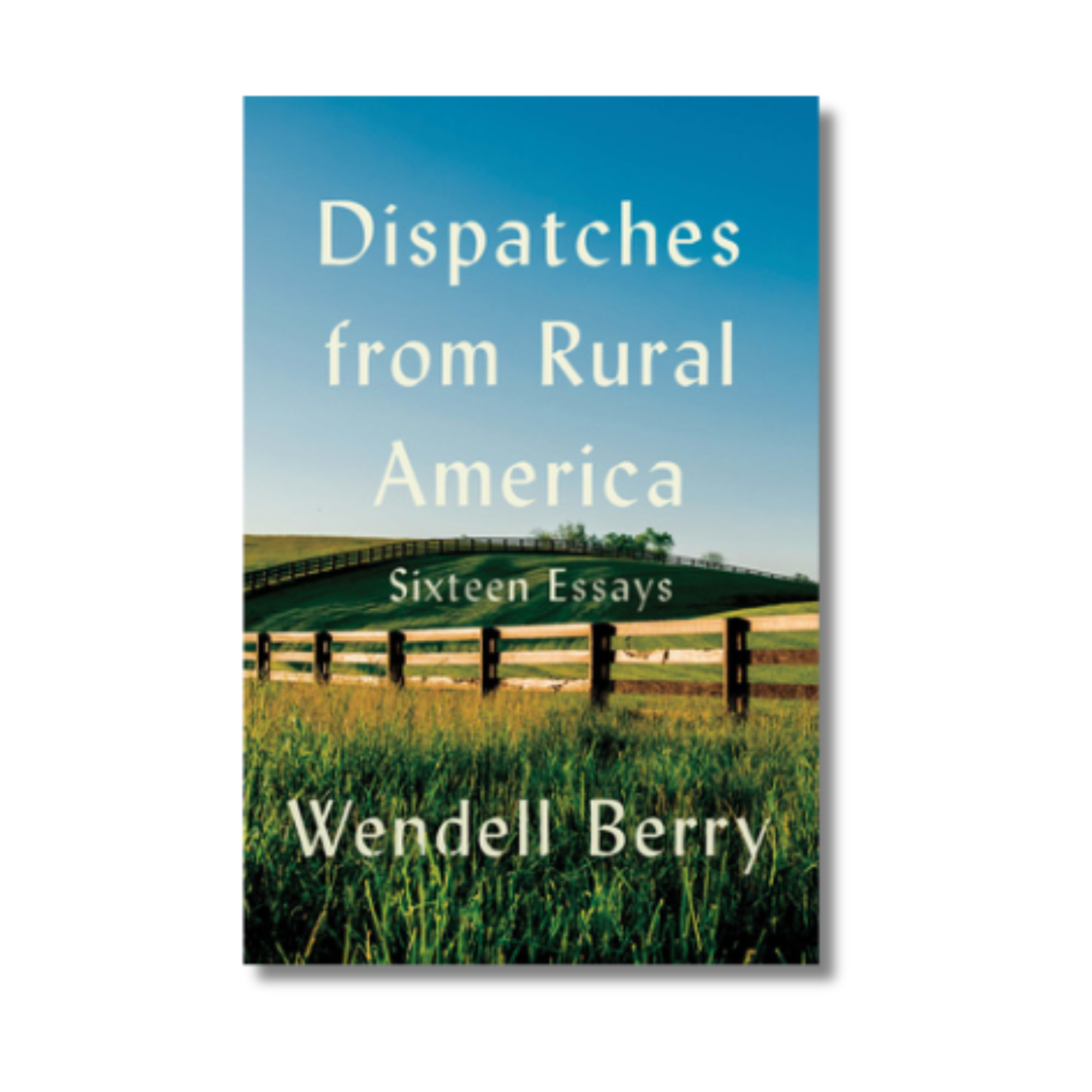
A new Port William novel by Wendell Berry is coming this year! If you do order it, consider ordering it through the Berry Center and support the good work they’re doing there. Also, I’ve just realized I didn’t write about my visit there last week. I’ll fix that soon. 📚